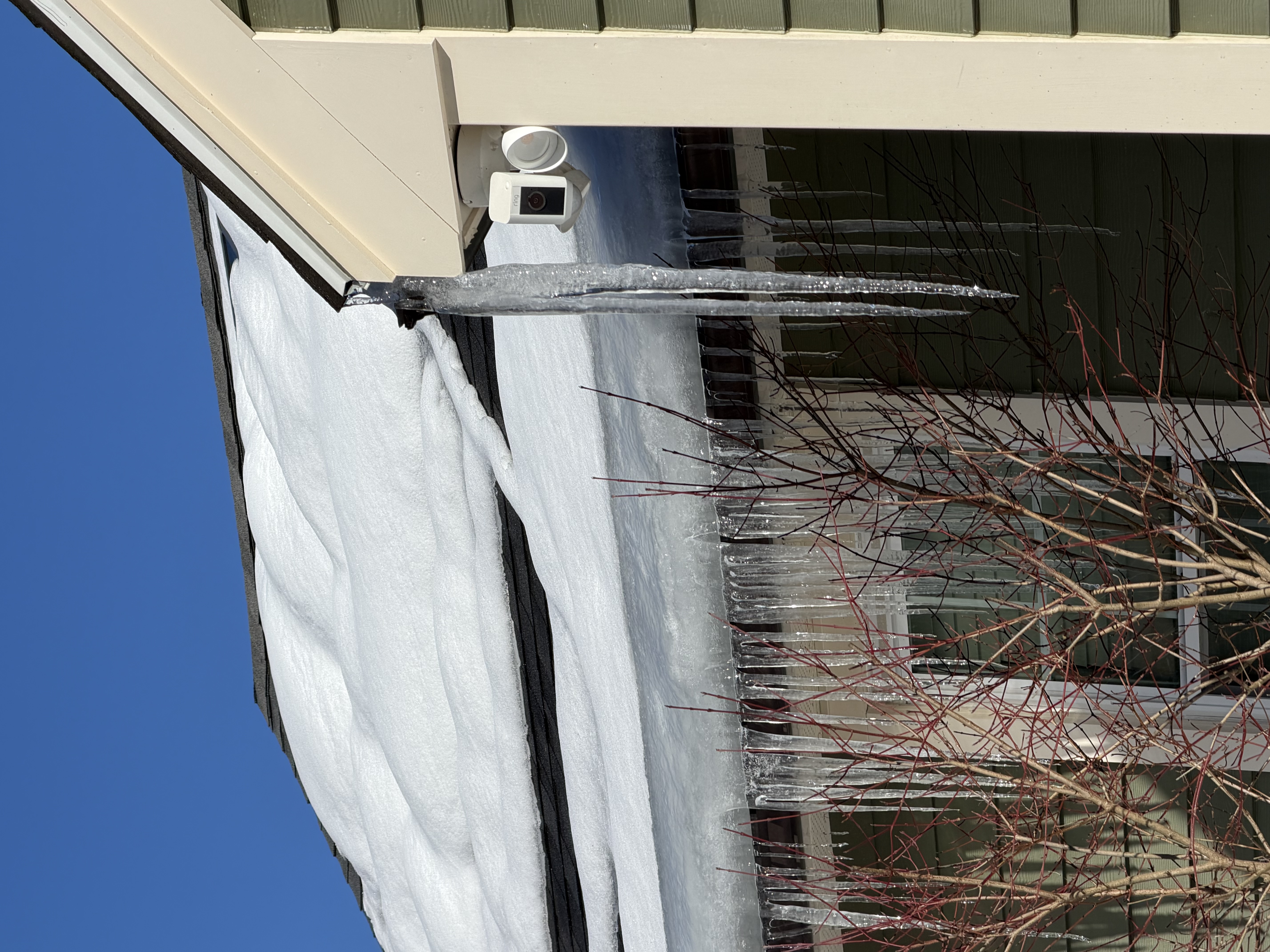
If you’ve experienced a winter leak despite investing in a new roof, you’re not alone — and there’s an important reason why.
What Causes Ice Dams?
Effective ice dam prevention starts with understanding the root cause.
Ice dams form when three conditions occur at the same time:
- Heavy snow accumulation
- Roof surface temperatures fluctuating above and below freezing
- Heat escaping from inside the home
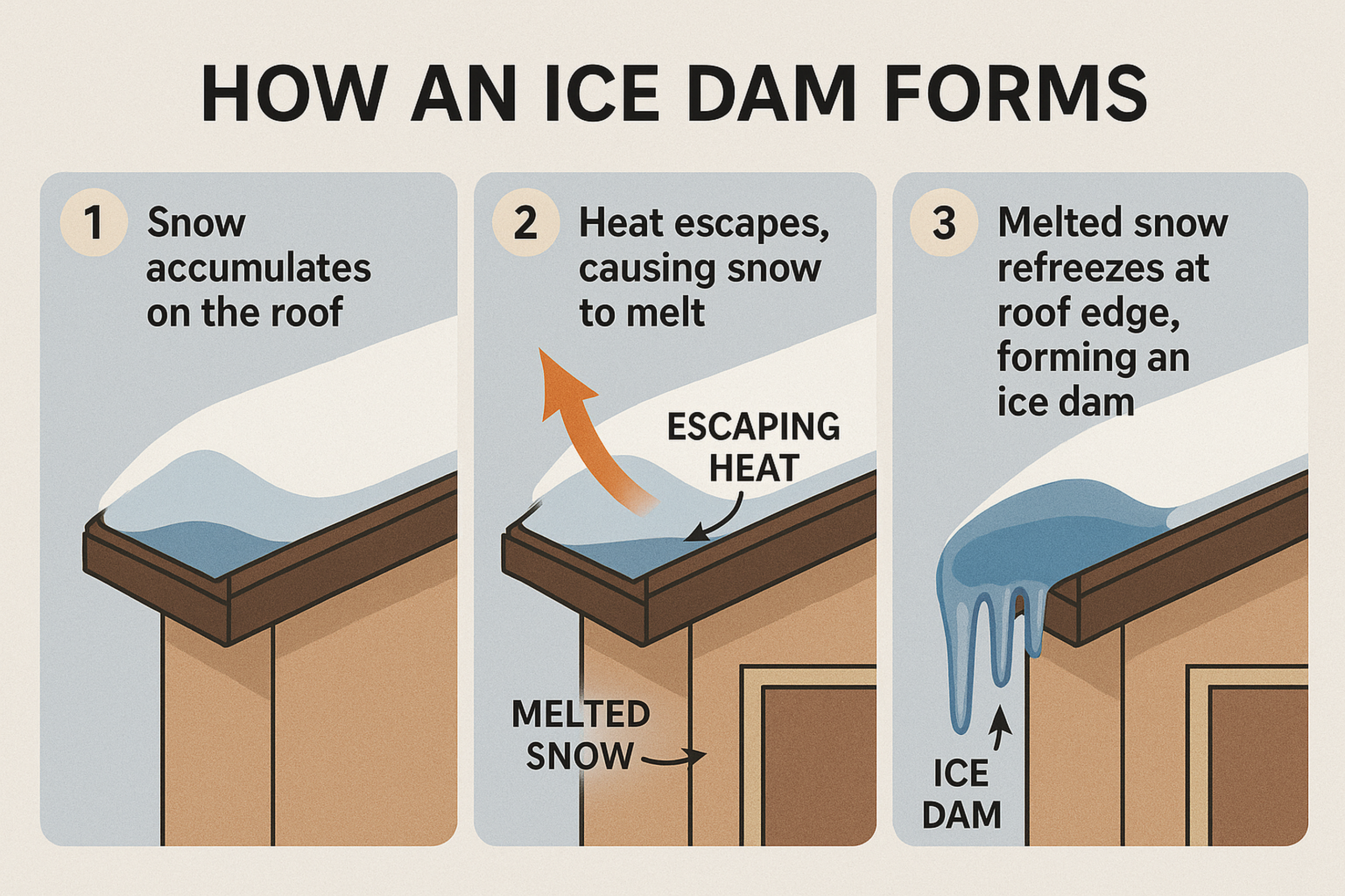
Here’s how the process works:
- Snow builds up on the roof.
- Heat from the attic warms the upper roof surface, melting the snow.
- Melted water runs down toward colder areas like the eaves or around chimneys.
- The water refreezes, forming an ice dam.
- Additional melting causes water to back up behind the ice.
- Under pressure, water can work its way beneath shingles.
Even a properly installed roof can be vulnerable when these conditions persist.
Most modern roof systems include a 6-foot ice and water shield membrane along the eaves and in vulnerable areas such as around chimneys.
This membrane serves as a secondary line of defense, protecting the roof decking from minor water backup. However, it’s important to understand its limitations:
- It is designed to resist occasional moisture intrusion.
- It is not designed to withstand prolonged, high-pressure water buildup from severe ice damming.
During heavy snow events with sustained freeze-thaw cycles, water can sometimes penetrate areas under extreme stress.
How Chimney Crickets Help — But Don’t Eliminate Ice Dams
A properly built chimney cricket is designed to divert water and snow around the chimney, preventing pooling and directing runoff away from vulnerable seams.
While a cricket improves drainage, it cannot:
- Stop melting and refreezing cycles
- Prevent ice from forming in freezing conditions
- Override heat loss coming from inside the home
If interior heat is escaping near the chimney chase, that localized warmth can accelerate melting and contribute to ice buildup despite proper roof construction.
Why a New Roof Is Not a Guarantee
Ice dam prevention goes beyond shingles and flashing. A roof system cannot control:
- Attic insulation levels
- Ventilation performance
- Air leakage
- Thermal bridging
- Snow drifting patterns
- Extreme winter weather
In many cases, ice dams are more of a building science issue than a roofing installation issue.
Heat loss from the home is typically the primary driver.
When a Leak Occurs
A significant leak should always be investigated thoroughly. While roofing components may perform correctly under normal conditions, contributing factors often include:
- Inadequate attic insulation
- Poor soffit-to-ridge ventilation
- Air gaps around chimney chases
- Uneven attic temperatures
- Snow accumulation patterns unique to the home’s layout
Identifying the true source of the problem ensures the correct long-term solution.
The Real Solution to Ice Dam Prevention
True ice dam prevention requires a comprehensive approach that includes:
- Proper attic insulation
- Balanced ventilation
- Air sealing to prevent heat loss
- Strategic snow management in severe climates
- Proper flashing and waterproofing at vulnerable areas
A new roof is an important part of the equation — but it works best when the entire roofing and attic system functions together.
Ice dam prevention is not achieved by roofing materials alone. While features like extended ice and water shield and chimney crickets improve protection, they cannot completely overcome the effects of heavy snow, fluctuating temperatures, and interior heat loss.
If winter leaks occur, the right next step is a detailed inspection to evaluate both the roof system and the home’s insulation and ventilation performance. Addressing the full system ensures stronger protection moving forward — and greater peace of mind during the next snowstorm.
If you’re dealing with winter leaks, now is the time to act.
Contact us today to schedule your ice dam prevention inspection and protect your home before the next storm.
Why Choose Marine Home Improvement?
Since 2001, Marine Home Improvement has been a trusted roofing and exterior remodeling specialist serving homeowners across Massachusetts. Our team delivers high-quality roof replacements, durable siding installations, custom decks, and professional window upgrades—always with clear communication and a commitment to excellent workmanship.
We use premium materials from trusted suppliers and provide detailed, transparent estimates so you always know what to expect. With strong warranties on both labor and products, you can feel confident your home is in expert hands.
Our BBB accreditation and consistent 5-star feedback on Facebook and Yelp highlight our dedication to reliability and customer satisfaction. When you choose Marine Home Improvement, you’re choosing quality, honesty, and long-lasting results.