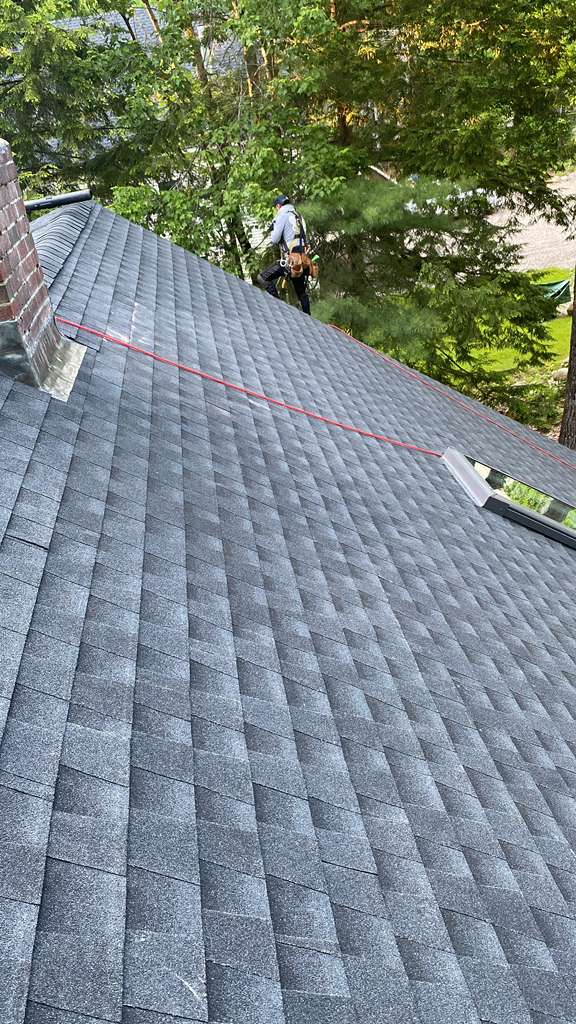
Have you noticed dark, sand-like particles collecting in your gutters, at the bottom of downspouts, or along the edge of your driveway? Those particles may be roofing granules. A small amount of roof shingle granule loss can be normal, especially on a newer roof or after a storm. But heavy or ongoing granule loss can be an important sign that asphalt shingles are wearing out.
For Massachusetts homeowners, this is worth paying attention to. Strong coastal winds, summer heat, heavy rain, snow, and freeze-thaw cycles all put pressure on roofing materials. When shingles lose too much of their protective surface, the roof can age faster and become more vulnerable to leaks.
The key is knowing the difference between normal shedding and a problem that calls for a professional roof inspection.
What Are Roofing Granules and Why Do They Matter?
Asphalt shingles are covered with small mineral granules. These granules give shingles their color, but their job is much more important than appearance.
They help protect the asphalt layer underneath from UV exposure, rain, snow, and everyday weathering. They also add a degree of fire resistance and help shingles withstand the changing conditions common across the South Shore and greater Massachusetts.
As granules wear away, the asphalt beneath becomes more exposed. That exposure can cause shingles to dry out, crack, curl, or deteriorate more quickly. Granule loss alone does not always mean your roof needs immediate replacement, but it should not be ignored when it is widespread or paired with other signs of wear.
Is Some Roof Shingle Granule Loss Normal?
Yes. New asphalt shingles often shed a small amount of excess granules after installation. You may notice them in the gutters after the first few heavy rainstorms. This usually settles down and is not automatically a reason for concern.
Older roofs can also release a small amount of granules over time. The concern is the amount and pattern of loss.
It is smart to schedule a roof inspection when you notice repeated accumulations of granules in your gutters or downspouts, bare-looking shingle patches, or dark areas where the shingle surface appears worn away.
Signs Granule Loss May Mean Your Roof Is Wearing Out
Granules in a gutter are not enough on their own to tell you the condition of the entire roof. However, they become more meaningful when they appear alongside other warning signs.
Your Gutters Keep Filling With Granules
A light amount after a major storm may be normal. But if you clear the gutters and keep finding a noticeable layer of coarse, dark material, your shingles may be losing their protective coating faster than they should.
This is particularly important for roofs that are already approaching the later part of their expected service life.
Shingles Look Patchy or Have Bare Spots
Look at the roof from the ground when the light is good. If some shingles appear darker, smoother, or less textured than the surrounding areas, granules may have worn away.
Avoid walking on the roof to check. Walking on older shingles can cause more damage and is not safe without the right equipment.
The Roof Is Curling, Cracking, or Losing Shingles
Granule loss often occurs alongside other age-related shingle problems. Curling edges, cracked tabs, lifted shingles, and missing shingles are more urgent signs because they can allow water to reach the layers beneath the roof covering.
You See Granules After Wind or Storm Damage
Massachusetts storms can loosen shingles and dislodge granules, particularly on aging roofs. Wind damage may be difficult to see from the ground, even when the roof has been affected.
If the granules appear suddenly after a storm, it is a good reason to have the roof checked before a small issue develops into a leak.
Your Roof Is 15–20 Years Old or More
The age of the roof matters. Asphalt shingles do not all fail at the same exact point, but older roofs are more likely to show granule loss as the protective surface begins to break down.
A roof inspection can help determine whether there is still useful life remaining, whether a targeted repair makes sense, or whether planning for replacement is the more cost-effective choice.
Why Granule Loss Matters in Massachusetts
Roofs in Massachusetts deal with more than ordinary rainfall. Along the South Shore, in towns such as Weymouth, Quincy, Marshfield, Hingham, Norwell, and Plymouth, roofs may also face strong winds, salt air, snow loads, ice, and frequent temperature changes.
Once a shingle has lost a significant amount of granules, sunlight can accelerate its deterioration. Then winter weather and freeze-thaw cycles can make existing weaknesses worse. A roof may not leak immediately, but the protective layer is no longer performing as well as it should.
That is why summer is a useful time to inspect an aging roof. It gives homeowners time to understand the condition of the roof and make a plan before fall storms and winter weather arrive.
Can Roof Shingle Granule Loss Be Repaired?
It depends on the cause and the extent of the damage.
If granule loss is limited to a few shingles after localized storm damage, replacing the affected shingles may be possible. The rest of the roof must be in good condition, and matching the existing shingle color can sometimes be difficult on an older roof.
If the loss is widespread across many roof slopes, patching individual shingles may only delay a larger problem. In that situation, a roof replacement may provide better long-term protection and value.
A professional inspection looks beyond the visible granules. The roofer should also evaluate shingle condition, flashing, roof penetrations, ventilation, soft spots, signs of moisture, and whether the roof decking has been affected.
What You Should Do If You Find Granules in Your Gutters
First, do not panic. A few granules do not automatically mean the roof has failed.
Take note of how much material you are seeing and whether it returns after cleaning. If possible, take a photo of the gutter debris and any visible areas of roof wear from the ground. This can be helpful when discussing the issue with a roofing contractor.
Then schedule an inspection if the granules are accumulating heavily, the roof is older, or you are also seeing curling, cracking, missing shingles, leaks, or staining inside the home.
Early evaluation gives you more options. You may only need a repair, but if replacement is approaching, it is better to make that decision before water damage or an emergency forces the issue.
When to Schedule a Roof Inspection
Schedule a roof inspection in Massachusetts if you notice:
- Large or recurring amounts of granules in gutters or downspouts
- Shingles with bare, dark, or patchy-looking areas
- Cracked, curled, lifted, or missing shingles
- A roof nearing the end of its expected lifespan
- Granule loss following high winds or a severe storm
- Ceiling stains, attic moisture, or signs of a roof leak
For active leaks, exposed roof decking, or major storm damage, contact a roofing professional as soon as possible.
Why Choose Marine Home Improvement?
Since 2001, Marine Home Improvement has been a trusted roofing and exterior remodeling specialist serving homeowners across Massachusetts. Our team delivers high-quality roof replacements, durable siding installations, custom decks, and professional window upgrades—always with clear communication and a commitment to excellent workmanship.
We use premium materials from trusted suppliers and provide detailed, transparent estimates so you always know what to expect. With strong warranties on both labor and products, you can feel confident your home is in expert hands.
Our BBB accreditation and consistent 5-star feedback on Facebook and Yelp highlight our dedication to reliability and customer satisfaction. When you choose Marine Home Improvement, you’re choosing quality, honesty, and long-lasting results.
Find Out What Your Roof Is Telling You
Concerned About Granules in Your Gutters?
Marine Home Improvement provides professional roof inspections, roof repair, and roof replacement services across Massachusetts. If you have noticed roof shingle granule loss, we can assess your roof’s overall condition and explain the practical next step—without guessing.