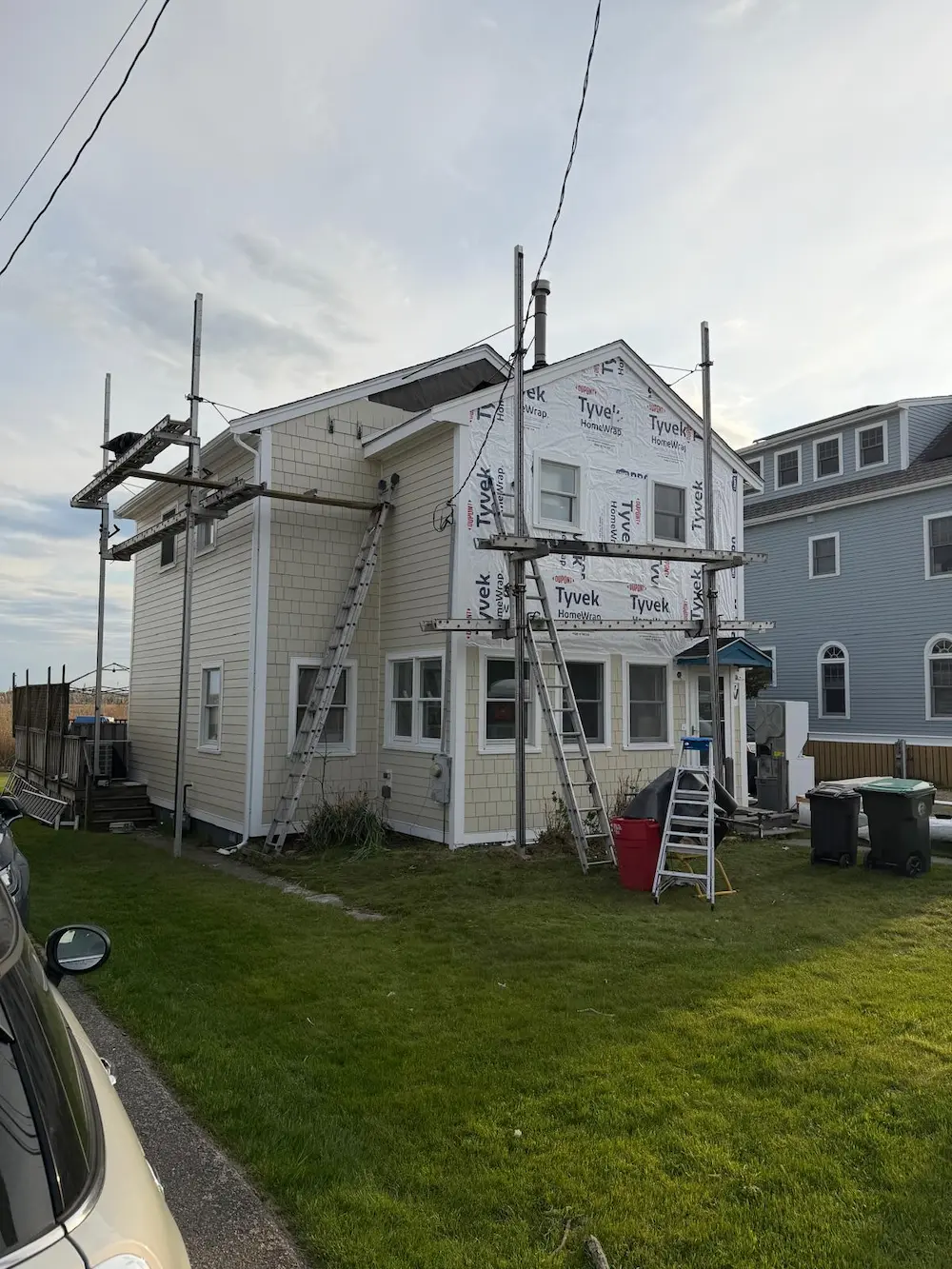
Hardie board siding problems are not common when the correct product is installed properly, but Massachusetts homeowners should still know which warning signs deserve attention. Fiber cement siding is designed to perform well in demanding climates, yet incorrect installation, damaged flashing, failing caulk, poor drainage, or neglected maintenance can allow small exterior issues to become larger repairs.
Massachusetts homes face a difficult combination of heavy rain, coastal wind, snow, ice, summer humidity, and repeated freeze-and-thaw cycles. Homes near the South Shore and Massachusetts coastline may also experience salt air and wind-driven moisture. These conditions make proper siding installation especially important.
James Hardie fiber cement products are designed to resist moisture damage, rot, pests, and harsh weather. However, even a durable siding product depends on correct clearances, flashing, fastening, joint treatment, moisture barriers, and trim installation. James Hardie provides detailed technical documents covering these installation requirements.
Here are the main Hardie board siding problems Massachusetts homeowners should watch for.
1. Cracked Hardie Board Siding
Cracking is one of the most noticeable signs that something may be wrong with fiber cement siding.
Small cracks may develop if a board was damaged during transportation, cutting, handling, or installation. Larger cracks can sometimes indicate that the boards were fastened incorrectly, installed too tightly, or placed over an uneven wall surface.
Homeowners should pay particular attention to cracks near:
- Windows and doors
- Corners
- Butt joints
- Rooflines
- Deck attachments
- Utility penetrations
- Areas where ladders or equipment may have struck the siding
A single damaged plank may be repairable or replaceable. However, repeated cracking across several sections may point to a larger installation issue.
Do not simply paint over a significant crack without determining what caused it. Paint may temporarily conceal the opening, but it will not correct movement, moisture intrusion, or improper fastening behind the siding.
2. Loose, Rattling, or Bulging Boards
Properly installed Hardie board siding should remain secure and generally sit flat against the wall assembly.
If boards appear loose, lift away from the wall, rattle during strong winds, or form noticeable waves, the fastening system should be inspected.
Possible causes include:
- Nails missing the wall framing
- Improper nail placement
- Nails driven too deeply
- Insufficient fastening
- Damaged wall sheathing
- Incorrect siding overlap
- Movement in the structure behind the siding
Loose boards are especially concerning in coastal Massachusetts communities where strong winds and nor’easters can place additional pressure on exterior cladding.
A loose plank may allow wind-driven rain to reach the wall assembly. It may also continue moving until the board cracks or separates further.
3. Gaps Between Hardie Siding Boards
Some siding joints are intentionally designed with small installation tolerances, but wide, irregular, or growing gaps should be evaluated.
Visible gaps can allow water to reach the flashing or weather-resistant barrier behind the siding. Although those underlying components are intended to help manage moisture, they should not be treated as substitutes for properly installed exterior cladding.
Problematic gaps may develop because of:
- Poor board placement
- Incorrect cutting
- Damaged board ends
- Missing joint flashing
- Movement around windows or doors
- Improper trim installation
- Previous repair work
Homeowners should avoid filling every visible joint with random exterior caulk. Hardie siding systems have specific requirements for different joints and transitions. An incorrect repair may trap moisture, create an unattractive finish, or interfere with how the wall is intended to drain.
4. Peeling, Chipping, or Fading Paint
Paint problems do not always mean that the fiber cement board itself has failed. However, widespread peeling, bubbling, cracking, or premature fading can indicate an issue with the finish, surface preparation, moisture exposure, or installation.
Site-painted siding may require repainting over time, especially on elevations that receive strong sun, wind, or coastal exposure.
Factory-applied ColorPlus finishes are designed to resist fading, chipping, peeling, and cracking better than many field-applied finishes, although every exterior still requires routine inspection and cleaning.
Paint or finish problems deserve closer attention when they appear alongside:
- Soft or deteriorated trim
- Rust stains
- Water streaks
- Open joints
- Failed caulking
- Damaged gutters
- Moisture staining beneath windows
These combinations can suggest that the problem is not limited to the paint.
5. Moisture Stains or Swelling Near the Bottom of the Siding
Fiber cement siding is engineered to resist damage from moisture, but it still needs to be installed with the required clearance above roofs, decks, walkways, steps, patios, and finished grade.
When siding sits too close to soil, mulch, concrete, shingles, or standing water, the lower edge may remain damp for extended periods.
Homeowners should look for:
- Dark staining along bottom edges
- Flaking paint near the foundation
- Moss or algae growth
- Siding that touches the roof
- Boards buried behind mulch
- Splashback from downspouts
- Water collecting beside the house
Low siding clearance often occurs when landscaping, patios, walkways, or decks are added after the original siding installation.
For example, a homeowner may raise a planting bed with new mulch until it nearly touches the siding. A new deck may also be installed without maintaining appropriate separation from the wall. These changes can create moisture exposure that was not present when the siding was first installed.
James Hardie’s technical documentation includes specific clearance and flashing guidance, which is why these areas should be evaluated by someone familiar with the product’s installation requirements.
6. Failed Caulking Around Windows, Doors, and Trim
Caulking is commonly used at selected siding transitions, trim connections, and exterior penetrations. Over time, caulk may shrink, split, pull away, or become brittle.
Failed caulking can allow water to enter around:
- Window trim
- Door trim
- Corner boards
- Exterior faucets
- Light fixtures
- Electrical outlets
- Vents
- Pipes and utility connections
Massachusetts temperature swings can be particularly hard on exterior sealants. Materials expand and contract during hot summers, cold winters, and rapid changes between freezing and thawing.
Do not judge the condition of the siding based only on the visible boards. Many moisture problems begin at the edges of the siding system, particularly around openings and penetrations.
7. Missing or Incorrect Flashing
Flashing helps direct water away from joints, windows, doors, roof intersections, and other vulnerable areas.
When flashing is missing, damaged, or installed incorrectly, water may travel behind otherwise sound Hardie board siding.
Warning signs of a flashing problem can include:
- Stains below windows
- Peeling paint near trim
- Interior water marks
- Rot around window or door framing
- Water damage near roof-to-wall intersections
- Repeated caulk failure in the same location
One common mistake is attempting to solve a flashing problem by applying more caulk. Caulk can be an important part of a properly designed exterior system, but it cannot replace correctly installed flashing.
If water repeatedly appears in the same location, the siding and trim may need to be carefully removed so the underlying flashing can be inspected.
8. Rust Marks or Exposed Fasteners
Hardie siding should be installed with approved corrosion-resistant fasteners suitable for the project and exposure conditions.
Rust streaks may indicate that an inappropriate fastener was used or that moisture is repeatedly reaching exposed metal.
This is especially important in coastal areas such as Marshfield, Scituate, Duxbury, Hull, Plymouth, Hingham, and other Massachusetts communities affected by salt air.
Homeowners may notice:
- Brown or orange streaks below nail heads
- Visible nail heads across the siding
- Nails backing out of the boards
- Cracks surrounding fasteners
- Touch-up paint failing around nails
A few isolated fastener marks may be repairable. Widespread rusting or exposed fastening may require a more detailed installation inspection.
9. Damage Around Gutters and Rooflines
Some apparent Hardie board siding problems actually begin with the roofing or gutter system.
Overflowing gutters, missing kick-out flashing, short downspouts, damaged roof flashing, or ice dams can direct large amounts of water against the siding.
Look for siding deterioration near:
- Roof edges
- Chimneys
- Dormers
- Gutter ends
- Downspout connections
- Lower roof sections that meet an exterior wall
Dark streaks or peeling paint beneath the end of a gutter may indicate that water is repeatedly flowing down the wall.
The siding may need repair, but the source of the water must also be corrected. Replacing a damaged plank without repairing the gutter or flashing problem will usually lead to repeated damage.
10. Uneven Siding Courses
HardiePlank lap siding is normally installed in straight, consistent horizontal courses. Uneven lines, changing exposures, tilted boards, or irregular overlaps can signal rushed or inaccurate installation.
Uneven siding may not always cause immediate water damage, but it can indicate that other installation details were also overlooked.
Check the siding from a distance and look along the full length of the wall. The rows should appear visually consistent around windows, doors, corners, and adjoining elevations.
Poor alignment is often most visible:
- Above and below windows
- Near additions
- Where old and new siding meet
- Around porch roofs
- Along long, uninterrupted walls
An experienced siding contractor can determine whether the issue is primarily cosmetic or whether it affects the siding’s performance.
11. Soft or Rotten Trim Beside Hardie Siding
The Hardie boards may remain in good condition while nearby wood trim begins to rot.
This is common around:
- Window trim
- Door trim
- Fascia boards
- Rake boards
- Corner boards
- Porch columns
- Exterior sills
Rotten trim can create openings that allow water behind the siding. Once water enters the wall assembly, damage may spread to the sheathing, framing, insulation, or interior finishes.
Replacing the trim with appropriate exterior-grade materials, including properly installed PVC trim where suitable, can help create a more durable exterior system.
The important point is that siding, trim, flashing, gutters, roofing, and the weather barrier must work together. A failure in one area can eventually affect the others.
12. Mold, Mildew, or Algae Growth
Green, black, or brown growth on Hardie siding is usually associated with shade, moisture, nearby vegetation, or inadequate drainage rather than a failure of the board itself.
Common causes include:
- Overhanging trees
- Shrubs touching the house
- Leaking gutters
- Sprinklers directed toward the siding
- North-facing walls that dry slowly
- Poor airflow between buildings
James Hardie recommends gentle cleaning methods, generally using a soft brush and garden hose rather than aggressive cleaning that could damage the finish.
Persistent growth should not simply be washed away and ignored. The surrounding drainage, landscaping, gutters, and moisture conditions should also be checked.
Are Hardie Board Siding Problems Usually Product Problems?
Not necessarily.
Hardie board is a type of fiber cement siding made from materials that include Portland cement, sand, water, and cellulose fibers. It is designed as a durable, low-maintenance exterior product. James Hardie states that its products are engineered for regional climate conditions and designed to resist moisture, rot, pests, and weather exposure.
Many issues blamed on the siding material actually originate from:
- Improper installation
- Missing flashing
- Incorrect clearances
- Failed caulking
- Roof or gutter leaks
- Damaged trim
- Poor wall preparation
- Impact damage
- Unauthorized alterations after installation
This is why a professional inspection should look at the complete exterior system instead of evaluating only the visible siding surface.
Can Individual Hardie Boards Be Repaired?
In many cases, yes.
A limited number of cracked, loose, or damaged boards may be replaced without removing all of the siding. Small finish defects may also be corrected using manufacturer-compatible products and repair procedures.
However, isolated repairs may not be sufficient when:
- Damage appears across several walls
- Water has reached the sheathing
- Siding was installed without proper clearances
- Multiple boards are loose
- Flashing is missing throughout the installation
- The wall has extensive rot
- Previous repairs have repeatedly failed
Before approving a repair, homeowners should ask what caused the damage and whether correcting that cause requires removing a larger section.
When Should Massachusetts Homeowners Schedule a Siding Inspection?
Consider scheduling an exterior inspection when you notice visible cracks, loose boards, water staining, failed caulking, rotten trim, unusual gaps, interior moisture, or repeated paint failure.
An inspection is also helpful after:
- A major windstorm
- Heavy snow or ice buildup
- Roof replacement
- Gutter failure
- Window or door replacement
- Deck construction
- Exterior landscaping changes
- Work involving utility penetrations
Homeowners purchasing a house with existing fiber cement siding may also benefit from having the installation reviewed before closing.
A professional inspection can help distinguish a cosmetic concern from a condition that could allow water into the wall.
Hardie Board Siding and Massachusetts Weather
Massachusetts weather can expose weaknesses in any exterior installation.
Winter brings freezing temperatures, snow, ice, and strong coastal storms. Spring and summer bring heavy rain, humidity, wind-driven water, and rapid temperature changes. Coastal communities also contend with salt air and more frequent wind exposure.
Properly selected and installed fiber cement siding is well suited to demanding conditions. James Hardie specifically promotes its products as engineered for regional climates and resistant to moisture, rot, pests, and weather damage.
However, long-term performance still depends on the quality of the entire installation.
How to Help Prevent Hardie Board Siding Problems
Homeowners can reduce the risk of future problems by inspecting the exterior at least once or twice a year and after major storms.
Keep gutters clean, direct downspouts away from the foundation, trim vegetation away from exterior walls, and avoid piling mulch against the siding.
Check caulking, trim, roof intersections, windows, doors, and utility penetrations regularly. Address small cracks or open joints before moisture reaches the wall assembly.
When hiring a siding contractor, ask about:
- Experience installing James Hardie products
- Weather barrier installation
- Flashing around openings
- Fastener selection
- Clearance requirements
- Cut-edge treatment
- Trim and corner details
- Product and labor warranties
Fiber cement siding should be installed according to the manufacturer’s current instructions rather than treated like wood or vinyl siding.
Have Your Hardie Siding Inspected Before Minor Damage Spreads
Not every crack, stain, or open joint means that your entire exterior needs replacement. However, Hardie board siding problems should be evaluated before moisture has an opportunity to damage the materials behind the siding.
Marine Home Improvement installs and repairs James Hardie siding for homeowners throughout Massachusetts, including the South Shore, Plymouth County, Norfolk County, Greater Boston, and surrounding coastal communities.
Our team can inspect your siding, trim, flashing, gutters, and surrounding exterior components to identify the source of the problem and recommend an appropriate repair or replacement plan.
Why Choose Marine Home Improvement?
Since 2001, Marine Home Improvement has been a trusted roofing and exterior remodeling specialist serving homeowners across Massachusetts. Our team delivers high-quality roof replacements, durable siding installations, custom decks, and professional window upgrades—always with clear communication and a commitment to excellent workmanship.
We use premium materials from trusted suppliers and provide detailed, transparent estimates so you always know what to expect. With strong warranties on both labor and products, you can feel confident your home is in expert hands.
Our BBB accreditation and consistent 5-star feedback on Facebook and Yelp highlight our dedication to reliability and customer satisfaction. When you choose Marine Home Improvement, you’re choosing quality, honesty, and long-lasting results.
Schedule a Hardie Siding Inspection
Protect your home before a small siding issue becomes a larger exterior repair.