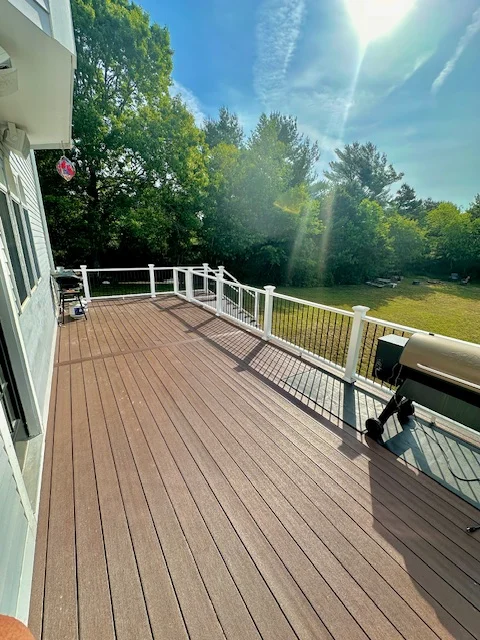
Your deck may look fine from above while the structure underneath is beginning to fail. Deck boards, railings, and stairs are easy to see, but the framing below—the posts, beams, joists, ledger board, fasteners, and footings—is what carries the weight of people, furniture, grills, and snow.
A deck framing inspection in MA can identify hidden rot, weak connections, movement, and other safety concerns before they turn into a major repair or a dangerous failure. This is especially important for older decks and for homes on the South Shore, where moisture, coastal air, seasonal freezing, and heavy snow can wear down exterior materials over time.
If your deck feels bouncy, uneven, loose, or simply old enough that you are unsure what is happening underneath, it is worth taking a closer look.
Why deck framing matters more than the surface
Replacing a few worn deck boards can improve appearance, but it does not automatically make the deck structurally safe. A deck is only as strong as the framing beneath it.
The main structural parts include:
- The ledger board, which connects the deck to the house
- Posts and beams, which transfer the deck’s weight to the ground
- Joists, which support the decking surface
- Footings, which keep the deck stable and help prevent settling
- Fasteners and connectors, which hold the structure together
When one of these parts is compromised, the deck may no longer safely support normal use. In some cases, a repair is enough. In others, rebuilding part or all of the deck is the safer long-term option.
7 signs your deck framing may no longer be safe
1. The deck feels bouncy, soft, or unstable
A small amount of movement can be normal on some decks, but noticeable bouncing, swaying, or shaking should not be ignored. If the deck moves when people walk across it, the framing may be undersized, weakened by rot, or missing proper connections.
Pay attention to whether movement occurs in one specific area or across the entire deck. A soft section near a door, stair landing, or railing can point to localized framing damage.
2. You can see rot on posts, joists, beams, or the ledger board
Wood rot is one of the most common framing concerns in Massachusetts. It often begins where water sits against wood, where deck components touch the ground, or where flashing and drainage are missing.
Look for:
- Soft, crumbling, cracked, or darkened wood
- Areas that can be easily pressed with a screwdriver
- Splitting around bolts, screws, or connectors
- Fungal growth or persistent moisture
- Posts that appear damaged near the ground
Surface discoloration does not always mean the framing is unsafe, but soft or deteriorated wood needs professional evaluation. Rot can spread farther inside the lumber than what is visible from the outside.
3. The deck is pulling away from the house
A deck that is attached to the home should be securely connected through a properly installed ledger board. If you see a gap between the deck and the house, loose bolts, water damage around the attachment area, or signs the deck is pulling away, stop using the deck until it can be inspected.
Ledger failure is a serious issue because this connection supports a significant portion of the deck’s load. Proper flashing is also important: without it, water can enter behind the ledger board and cause hidden rot in both the deck framing and the home’s exterior wall.
4. Posts are leaning, cracked, or sitting on improper supports
Deck posts should be plumb, securely connected, and supported by stable footings. Posts resting directly on soil, loose patio blocks, or damaged concrete may shift as the ground freezes, thaws, and settles.
A post that is leaning or cracked can be a sign of movement below ground or excessive stress above it. Older decks sometimes have inadequate footings that no longer provide reliable support, particularly after years of New England weather.
5. Metal connectors, bolts, or fasteners are rusted or missing
The hardware used to connect a deck is just as important as the wood. Joist hangers, post bases, bolts, structural screws, and brackets should be secure and appropriate for exterior use.
Look underneath your deck for rusted hardware, missing connectors, loose bolts, nails pulling out, or improvised repairs. Coastal Massachusetts homes may be especially exposed to moisture and salt air, which can accelerate corrosion on unsuitable metal components.
6. The deck has uneven areas, sagging, or gaps that keep getting worse
An uneven deck surface can sometimes be caused by worn boards, but it can also point to sagging joists, weakened beams, settling footings, or post movement. Gaps around the deck where it meets the house, stairs, or railings may also become more noticeable as the structure shifts.
If the deck has changed shape over time, do not assume it is just cosmetic. The cause should be identified before replacing boards or adding new finishes.
7. The deck is older and has never had a structural review
Age alone does not make a deck unsafe, but older decks deserve closer attention—especially if they were built before current construction practices, have had several repairs, or have been exposed to years of rain, snow, and summer humidity.
A deck may also need an inspection after a severe storm, a long period of water exposure, visible wood rot, or before placing a heavy load such as a hot tub, large outdoor kitchen, or substantial built-in seating.
What to check during a basic visual deck inspection
Homeowners can perform a visual check from ground level, but should avoid crawling under an unstable deck or attempting structural repairs without experience.
Start by looking for obvious movement, sagging, damaged wood, loose railings, unstable stairs, and visible corrosion. Check whether water is draining away from the deck instead of pooling against posts or the house.
Then look at the framing from a safe angle. Pay close attention to connections between the deck and the home, the condition of posts near the ground, and any area where the deck looks uneven from above.
Do not rely on a fresh coat of stain or new deck boards as proof that the structure is sound. Those improvements can cover signs of an older framing problem without solving it.
When should you stop using a deck?
You should limit or stop using a deck and arrange a professional inspection if it is pulling away from the house, visibly sagging, significantly bouncing, leaning, or showing major rot. The same applies if a railing is loose, stairs move underfoot, or a post appears damaged or unsupported.
Avoid putting heavy furniture, grills, planters, or large groups of people on a deck that has concerning structural signs. It is better to address the issue early than wait until a small repair becomes a full rebuild.
Can deck framing be repaired?
In many cases, yes. Localized rot, damaged decking, corroded hardware, or one weak component may be repairable if the surrounding structure is still sound.
However, a deck may need more extensive reconstruction when the ledger board is compromised, multiple posts or beams are deteriorated, footings have shifted, or the existing framing no longer provides a safe foundation for the deck. Rebuilding may be the better value when repairs would only extend the life of an outdated structure for a short time.
The right solution depends on the condition of the deck, the cause of the damage, and whether the framing can safely support the deck you want to keep.
For guidance on whether your project needs repair work or a new build, read our guide: Deck Builders vs. Deck Repair Contractors: What Type of Help Does Your Project Need?
Deck framing inspections for Massachusetts homes
Marine Home Improvement helps homeowners evaluate deck conditions and plan practical repair or replacement work throughout Massachusetts, including the South Shore. We look beyond the visible deck boards to assess the framing, supports, connections, and areas where moisture may have caused hidden damage.
A timely deck framing inspection can help you make an informed decision before investing in new decking, railings, stairs, or other upgrades. It can also help prevent a structural issue from becoming a more expensive project later.
For deck repair, replacement, and new deck construction, visit our decking contractor page. You can also see why homeowners should address aging deck concerns before they worsen in our article on repairing or replacing a deck before summer.
Why Choose Marine Home Improvement?
Since 2001, Marine Home Improvement has been a trusted roofing and exterior remodeling specialist serving homeowners across Massachusetts. Our team delivers high-quality roof replacements, durable siding installations, custom decks, and professional window upgrades—always with clear communication and a commitment to excellent workmanship.
We use premium materials from trusted suppliers and provide detailed, transparent estimates so you always know what to expect. With strong warranties on both labor and products, you can feel confident your home is in expert hands.
Our BBB accreditation and consistent 5-star feedback on Facebook and Yelp highlight our dedication to reliability and customer satisfaction. When you choose Marine Home Improvement, you’re choosing quality, honesty, and long-lasting results.
Concerned About the Structure Under Your Deck?
Schedule a deck evaluation with Marine Home Improvement and get clear guidance on whether your framing needs repair, reinforcement, or replacement.