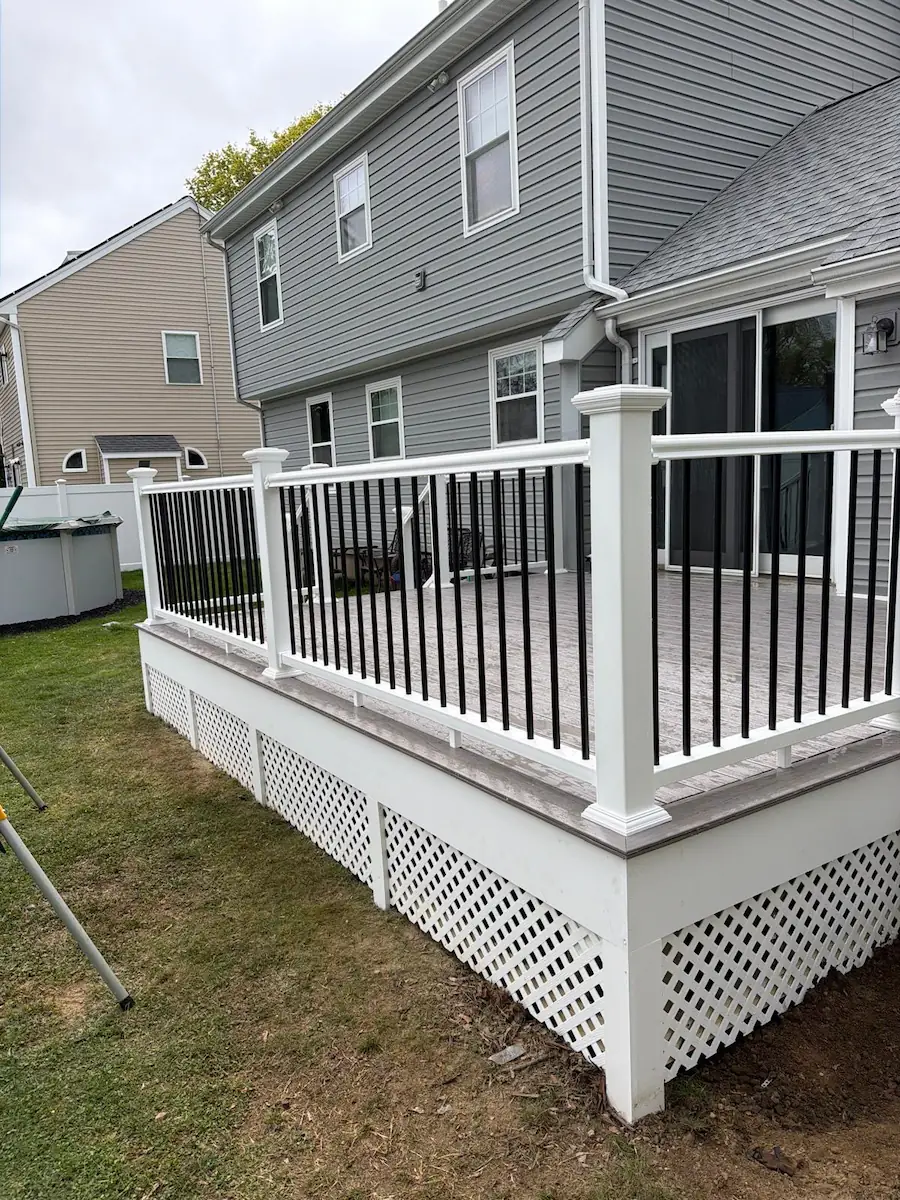
A few cracked deck boards or a loose railing do not always mean you need a completely new deck. In many cases, a targeted repair can restore a safe, usable outdoor space. But when the problems extend below the surface, repairs may only hide a larger structural issue.
For homeowners looking into deck framing replacement South Shore MA, the key question is not simply whether the deck looks worn. It is whether the structure underneath can safely support the deck, railings, stairs, furniture, and the people using it.
At Marine Home Improvement, we help homeowners across the South Shore assess aging decks and determine whether a repair, structural rebuild, or full deck replacement makes the most sense. From Weymouth and Quincy to Hingham, Hanover, Marshfield, Pembroke, Plymouth, and nearby Massachusetts communities, our team looks beyond the visible deck boards to evaluate the components that matter most.
The Deck Surface Is Only One Part of the Structure
Deck boards are the most visible part of a deck, so they are usually the first thing homeowners notice when there is peeling stain, splintering, cracking, or rot. However, the boards are only the finished walking surface.
A safe deck also relies on:
- The ledger board that connects the deck to the house
- Joists that support the deck boards
- Beams that carry the deck load
- Posts that support the beams
- Footings below ground
- Hardware, flashing, hangers, and fasteners
- Stair framing and rail connections
When these components are solid, replacing a few boards or repairing a railing can be a practical solution. When they are deteriorated, loose, undersized, or damaged by moisture, surface-level repairs may not be enough.
When Can a Deck Be Repaired?
Deck repair may be appropriate when the damage is limited and the supporting structure remains in good condition. For example, a repair may make sense if:
- Only a few deck boards are cracked, warped, or rotted
- A railing needs tightening or partial replacement
- One stair tread or handrail is damaged
- Fasteners need to be replaced in a small area
- The deck frame, posts, beams, and footings are stable
- Water has not caused widespread rot around the house connection
A professional inspection helps separate a surface problem from a structural one. Replacing boards on top of weakened framing can make a deck look better temporarily, but it does not correct the underlying safety concern.
Signs Surface Repairs May No Longer Be Enough
1. The deck feels bouncy, soft, or unstable
A deck should feel firm underfoot. Noticeable movement, sagging, or a springy feeling can point to weakened joists, failing beams, loose connections, or undersized framing.
This is especially important for decks that support outdoor kitchens, heavy furniture, planters, hot tubs, or large gatherings. A structural inspection can identify where the movement is coming from and whether the framing can be repaired or should be replaced.
2. There is visible rot in joists, beams, or posts
Surface boards can sometimes be replaced individually. Rot in the framing is more serious because it affects the deck’s ability to carry weight safely.
Look underneath the deck for:
- Soft, dark, or crumbling wood
- Deep cracks in posts or beams
- Joists pulling away from their connections
- Wood that flakes or compresses when pressed
- Deterioration around fasteners and hardware
Massachusetts decks are exposed to rain, snow, humidity, freeze-thaw cycles, and seasonal moisture. On coastal and South Shore properties, salt air and damp conditions can also speed up wear on wood and metal components.
3. The ledger board connection is damaged
The ledger board is the structural connection between the deck and the home. If it is not properly installed, flashed, or maintained, water can enter the area behind the deck and damage both the framing and the house.
Warning signs can include:
- A gap between the deck and the house
- Rot near the ledger board
- Loose bolts or hardware
- Water staining near the connection
- Damaged siding, trim, or sheathing behind the deck
- Missing or failed flashing
Because the ledger supports a major portion of the deck load, this is not an area to cover up with new boards. A damaged connection should be professionally evaluated before deciding on repairs.
4. Posts or footings are shifting
A deck needs stable support from the ground up. If the posts are leaning, the deck is settling unevenly, or the footings are cracking or moving, the problem may be below grade.
South Shore soil conditions, drainage patterns, frost movement, and older construction methods can all affect deck footings over time. Signs of footing trouble include:
- Posts that no longer sit plumb
- Cracked or deteriorated concrete
- Uneven deck surfaces
- Gaps at beam or post connections
- Stairs that have shifted away from the deck
- Water pooling near posts or the foundation
When the support system is compromised, a deck footing replacement Massachusetts homeowners can rely on may be part of a larger structural rebuild.
5. Railings and stairs are repeatedly coming loose
Loose railings and unstable stairs are safety issues, not just cosmetic concerns. If tightening hardware does not solve the problem—or if the surrounding framing is soft or deteriorated—the attachment points may no longer be strong enough.
A deck replacement or structural rebuild gives homeowners the chance to upgrade stairs, improve railing layout, and create a safer transition between the home, deck, and yard.
6. You keep making repairs to the same deck
A single repair can be worthwhile. Repeated repairs to boards, railings, stairs, framing, and hardware may signal that the deck has reached the point where replacement is the better long-term investment.
Instead of continuing to spend on short-term fixes, a full assessment can clarify whether rebuilding the structure would provide greater safety, durability, and value.
Why Deck Framing Matters More Than New Deck Boards
Replacing deck boards can improve appearance, but new boards alone do not make an older deck structurally sound. The framing underneath must be able to support the new surface and meet the demands of everyday use.
Before installing a new decking surface, Marine Home Improvement evaluates key structural areas, including:
- Joist condition and spacing
- Beam and post stability
- Ledger board connection and flashing
- Footing condition
- Rusted, corroded, or missing hardware
- Stair framing
- Railing attachment points
- Drainage around the deck and home
If the framing is sound, a resurfacing project may be possible. If the structure is no longer dependable, rebuilding from the footings and framing up may be the safer and more cost-effective choice.
A Deck Replacement Is Also an Opportunity to Improve the Space
When a deck needs structural replacement, homeowners can do more than recreate the old layout. A new deck can be designed around how the family uses the outdoor space today.
Common upgrades include:
- A larger grilling or dining area
- Wider, safer stairs
- Improved railings
- Better access to the yard
- Composite decking for lower maintenance
- Updated drainage planning
- Stronger footings and framing
- A layout that complements a new door, siding, or exterior renovation
Composite decking is a popular option for South Shore homeowners who want a durable, low-maintenance surface. While every project is different, it can reduce the need for regular staining and help create a cleaner, more consistent exterior look.
Why South Shore Homes Need a Local Deck Assessment
Decks in Massachusetts face four-season weather, including summer humidity, heavy rain, snow, ice, and repeated freezing and thawing. Homes near the coast also contend with moisture, wind exposure, and salt air.
A deck should be evaluated as part of the whole exterior system. Poor gutter drainage, water runoff, failing trim, or moisture around an exterior door can all affect the area where the deck meets the home.
Marine Home Improvement serves homeowners throughout the South Shore with practical recommendations based on the deck’s actual condition. We will explain whether a targeted repair is reasonable, whether a rotted deck framing repair Massachusetts homeowners need is possible, or whether a structural replacement is the better path.
Why Choose Marine Home Improvement?
Since 2001, Marine Home Improvement has been a trusted roofing and exterior remodeling specialist serving homeowners across Massachusetts. Our team delivers high-quality roof replacements, durable siding installations, custom decks, and professional window upgrades—always with clear communication and a commitment to excellent workmanship.
We use premium materials from trusted suppliers and provide detailed, transparent estimates so you always know what to expect. With strong warranties on both labor and products, you can feel confident your home is in expert hands.
Our BBB accreditation and consistent 5-star feedback on Facebook and Yelp highlight our dedication to reliability and customer satisfaction. When you choose Marine Home Improvement, you’re choosing quality, honesty, and long-lasting results.
Schedule a South Shore Deck Inspection
If your deck feels unstable, shows signs of rot underneath, has shifting stairs or railings, or has needed repair after repair, do not assume replacing a few surface boards will solve the issue.
Marine Home Improvement can inspect the framing, connections, footings, and visible damage to help you make an informed decision. Whether your deck needs a focused repair, a structural rebuild, or a complete replacement, we can help you plan a safer, stronger outdoor space built for Massachusetts weather.