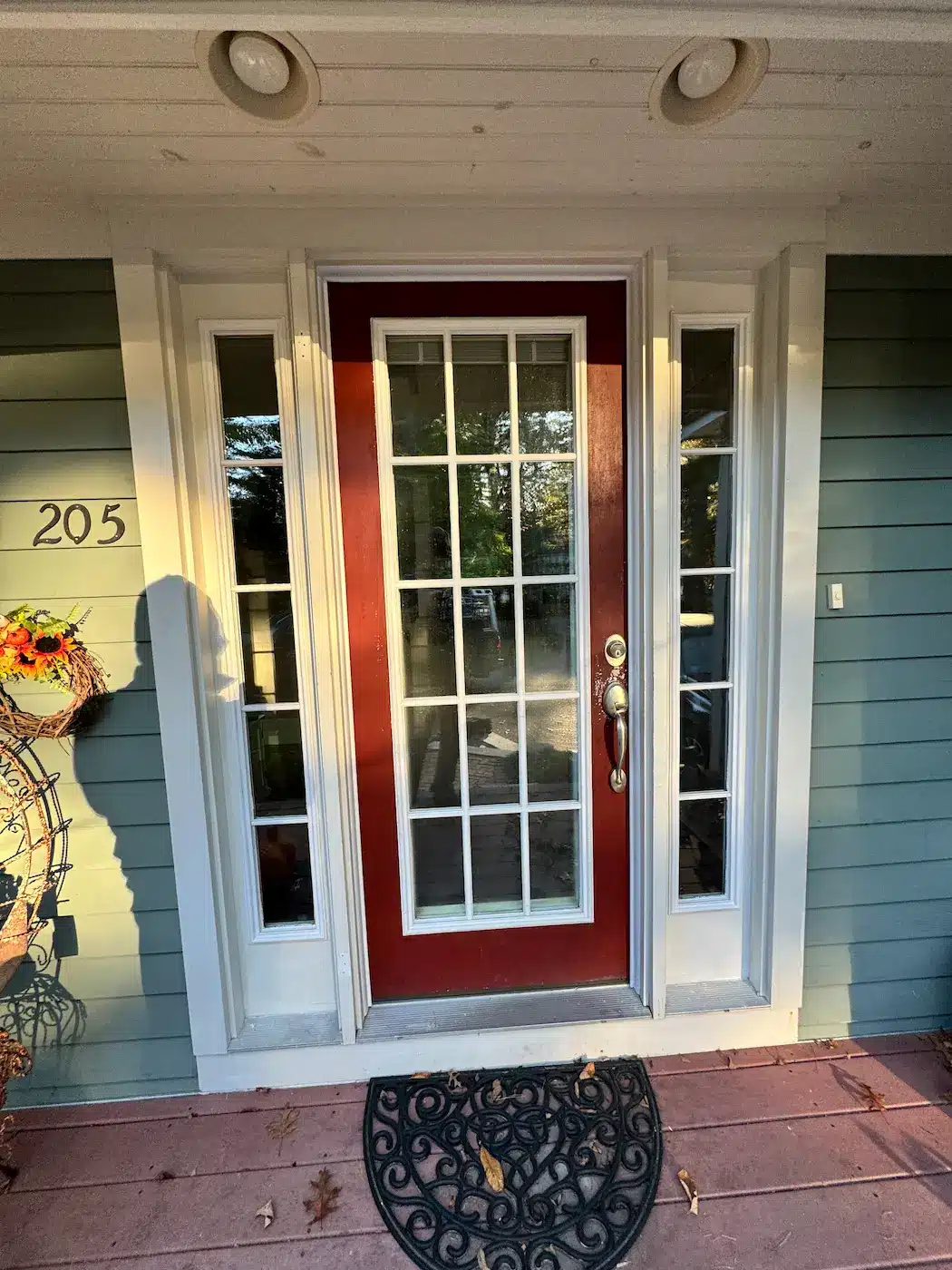
Exterior door water intrusion in Massachusetts can start at small gaps that are easy to overlook. Along the coast, wind-driven rain can force water into joints around an entry door, patio door, side door, or rear door—even when the door itself appears to be in good condition.
For homeowners in Plymouth, Quincy, Marshfield, Scituate, Duxbury, Hull, and throughout coastal Massachusetts, repeated exposure to rain, salt air, humidity, and seasonal freeze-thaw cycles can cause door openings to leak, deteriorate, or develop hidden damage behind the trim.
The key is to identify where water is entering before it reaches the framing, sheathing, flooring, or nearby siding.
Why Wind-Driven Rain Is Different
Rain does not always fall straight down. During coastal storms, wind can push water sideways and upward against a home’s exterior. This puts extra pressure on the seals, flashing, trim joints, and thresholds around exterior doors.
A small opening that may not leak during a light rain can become a problem during a nor’easter, thunderstorm, or long period of wind-driven rain. Over time, repeated moisture exposure can lead to peeling paint, soft trim, drafts, water stains, and damage around the door frame.
1. The Top of the Door and Head Trim
The top edge of an exterior door is a common entry point for water. Rain can get behind the head trim if caulk has separated, the trim is cracked, or the flashing above the door is missing or improperly installed.
Proper flashing should direct water away from the opening and onto the exterior surface of the wall. When that detail fails, water may travel behind siding or trim and remain hidden until visible damage appears.
Look for:
- Cracked or missing caulk above the door
- Paint bubbling or peeling on the head trim
- Dark stains beneath the top casing
- Gaps where trim meets siding
- Water marks on the interior wall above the door
A door flashing repair in Massachusetts should address the water path, not simply cover the area with more caulk.
2. The Jamb-to-Siding Connection
The vertical sides of the door frame are another vulnerable area. Water can enter where the door jamb, exterior casing, siding, and sealant meet. This is especially common on older homes or around doors that were replaced without fully correcting the surrounding weather barrier.
If water reaches behind the trim, it can affect the jamb, wall sheathing, and adjacent siding. The damage may remain concealed until the trim feels soft or begins to pull away.
Signs of door jamb water damage include:
- Soft or spongy casing
- Cracks along the trim-to-siding joint
- Discoloration at the lower corners of the door
- Recurring paint failure in the same area
- A musty smell or staining inside near the door
3. The Door Threshold and Sill
An exterior door threshold leak often occurs at the bottom of the opening, where rain, snow, foot traffic, and drainage meet. If the threshold is loose, worn, poorly sealed, or not properly sloped, water can collect beneath it and reach the sill or subfloor.
This issue is common at side and rear entries where gutters overflow nearby, roof runoff lands near the door, or walkways direct water toward the house.
Check for:
- Standing water at the threshold after rain
- A loose or damaged threshold
- Soft flooring or staining just inside the door
- Drafts at the bottom corners
- Corroded fasteners or hardware
- Gaps between the threshold and exterior surfaces
Water entering beneath a threshold should be inspected promptly, since the visible issue may be smaller than the damage below it.
4. Door Trim Corners and Open Joints
Trim corners, miter joints, and exposed end grain can absorb moisture when paint or sealant fails. On coastal homes, these areas may stay damp longer because of humidity, shade, and repeated rain exposure.
Once water gets behind exterior trim, simply repainting the surface may not be enough. The repair should determine whether the trim, jamb, siding connection, or flashing has been affected.
Pay close attention to:
- Open trim joints
- Split or warped casing
- Darkened wood at lower trim corners
- Nail holes or fasteners with rust stains
- Caulk separating from the trim
5. Drainage and Splashback Near the Entry
Not every door leak begins at the door itself. Overflowing gutters, short downspouts, damaged kickout flashing, poor grading, and hard surfaces sloping toward the entry can repeatedly send water against the threshold and lower trim.
During a heavy coastal storm, this water can splash against the door opening or pool beside it. Over time, that repeated exposure can lead to coastal door frame water damage.
To reduce the risk:
- Keep gutters clear and securely fastened
- Extend downspouts away from doorways
- Make sure walkways and landscaping drain away from the home
- Address roof runoff that lands near an entry
- Inspect lower trim after storms for dampness or damage
What to Do If You Notice Water Around an Exterior Door
Start by noting when and where the issue occurs. Does it happen only during wind-driven rain? Is water entering at the top, side, or threshold? Does the problem return after caulking or painting?
Avoid assuming that the door slab is the only issue. A water problem may involve flashing, exterior trim, siding transitions, drainage, or hidden deterioration around the opening.
A professional inspection can help determine whether the repair is limited to sealing and trim work or whether the jamb, sill, framing, or nearby exterior materials need attention.
Why Choose Marine Home Improvement?
Since 2001, Marine Home Improvement has been a trusted roofing and exterior remodeling specialist serving homeowners across Massachusetts. Our team delivers high-quality roof replacements, durable siding installations, custom decks, and professional window upgrades—always with clear communication and a commitment to excellent workmanship.
We use premium materials from trusted suppliers and provide detailed, transparent estimates so you always know what to expect. With strong warranties on both labor and products, you can feel confident your home is in expert hands.
Our BBB accreditation and consistent 5-star feedback on Facebook and Yelp highlight our dedication to reliability and customer satisfaction. When you choose Marine Home Improvement, you’re choosing quality, honesty, and long-lasting results.
Stop Water From Reaching Your Door Frame
Protect Your Door Opening Before Water Spreads
Exterior door water intrusion in Massachusetts can quietly worsen behind trim and siding. If wind-driven rain is reaching your doorway, Marine Home Improvement can assess the problem and recommend a durable repair approach.