
A pre-fall roof inspection in Massachusetts helps homeowners find loose shingles, damaged flashing, clogged drainage, and early leaks before autumn rain and wind make those problems worse. August is an especially useful time to schedule this work because summer storm damage is easier to identify and there is still time to complete repairs before leaves begin collecting in roof valleys and gutters.
For homeowners across the South Shore, Greater Boston, Plymouth County, and nearby coastal communities, late summer is not simply the end of the warm season. It is the transition into months of heavier debris, wind-driven rain, falling temperatures, and eventually freezing weather.
The short answer is simple: inspect the roof in August, repair vulnerable areas, and confirm that rainwater can move off the house correctly before fall weather arrives.
Why should Massachusetts homeowners inspect their roofs in August?
August offers Massachusetts homeowners an opportunity to address two different kinds of roof risk at once:
- Damage left by summer heat, humidity, thunderstorms, and wind
- Weak areas that could fail during fall rain and stronger seasonal winds
Summer weather can loosen shingles, wear away protective granules, deteriorate exposed sealants, and reveal drainage problems. If these conditions are ignored, repeated autumn rain can carry water beneath roofing materials or into vulnerable areas around chimneys, skylights, vents, and roof edges.
Completing August roof maintenance in Massachusetts also gives homeowners more time to plan. A small repair found now may be corrected before it becomes an active leak during poor weather.
Pre-fall roof inspection checklist for Massachusetts homes
1. Look for missing, lifted, or damaged shingles
Begin with a visual inspection from the ground. Binoculars can help you see the roof without climbing onto it.
Look for:
- Missing shingles
- Shingles with lifted or curled edges
- Cracked or torn shingles
- Uneven sections of roofing
- Exposed areas that appear different from the surrounding roof
- Shingle pieces on the lawn after a storm
A lifted shingle may not cause a visible leak during every rainfall. However, wind-driven rain can enter beneath an unsecured edge and reach the roof deck.
Homes in Scituate, Hull, Marshfield, Duxbury, Plymouth, Sandwich, and other exposed communities may experience additional stress from coastal wind, moisture, and salt air.
2. Check for excessive shingle granules
Asphalt shingles gradually lose some granules as they age. A large or sudden increase, however, can indicate weathering, impact damage, or an aging roof surface.
Check:
- Inside gutter channels, where safely visible
- Near downspout outlets
- On patios or walkways beneath roof edges
- For dark or bare-looking patches on the roof
Granules help protect asphalt shingles from sunlight and weather exposure. Significant loss does not automatically mean that the entire roof must be replaced, but it warrants closer evaluation.
For more detail, link to your recent article about roof shingle granule loss.
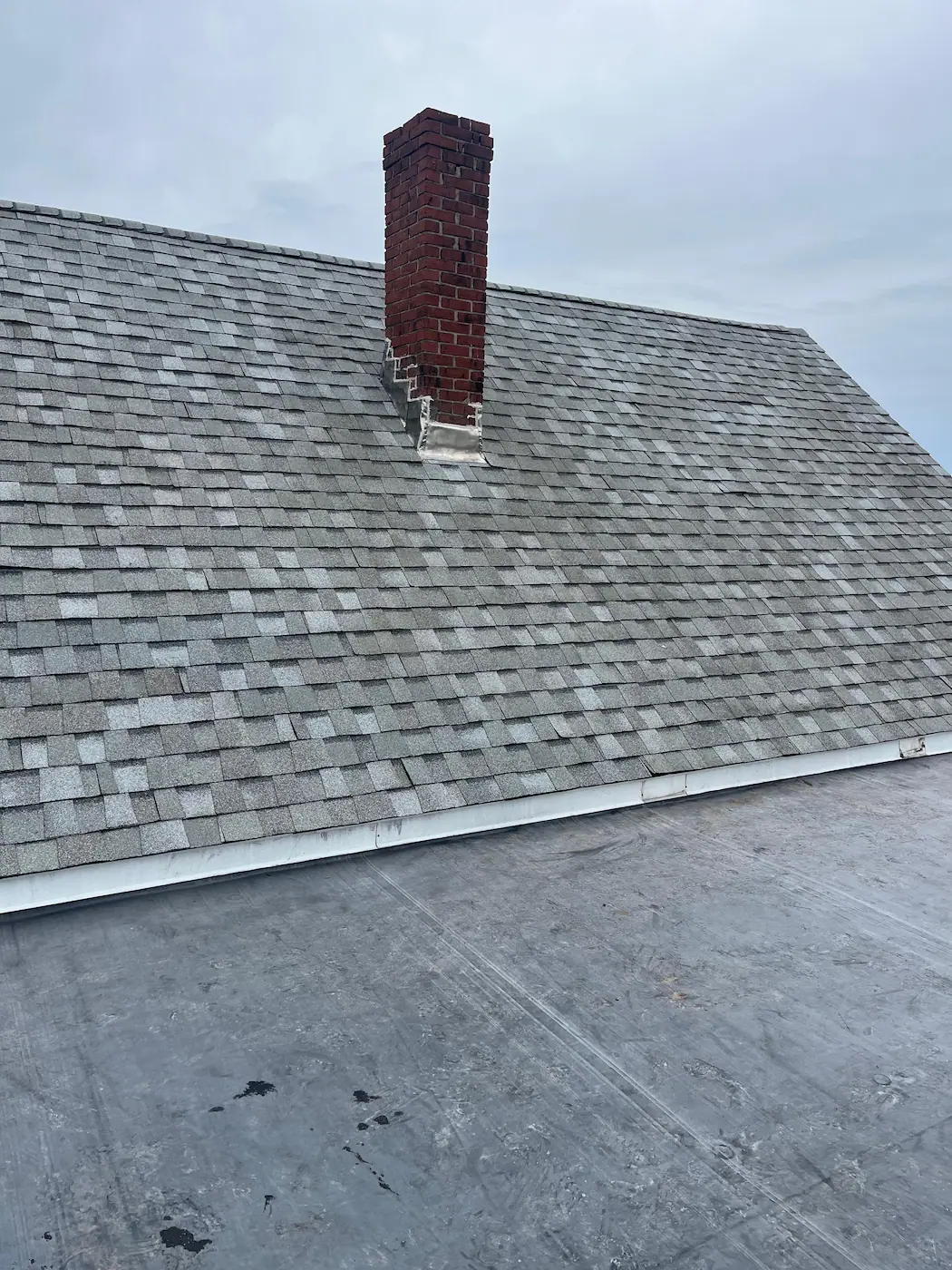
3. Inspect flashing and roof penetrations
Many roof leaks begin around a penetration or transition rather than in the middle of an intact shingle field.
Pay particular attention to:
- Chimneys
- Skylights
- Plumbing vent pipes
- Exhaust vents
- Roof-to-wall intersections
- Valleys
- Dormers
- Satellite or equipment attachment points
Look for loose metal, visible gaps, corrosion, cracked sealant, or staining below these areas. Flashing problems should be evaluated before repeated fall rain tests the same weak point again and again.
Caulk alone is not always a lasting flashing repair. A roofing professional should determine why the area failed and whether the flashing needs to be resealed, repaired, or replaced.
4. Examine gutters and downspouts before leaves fall
Roof maintenance and drainage maintenance are closely connected. Gutters need to carry water away from the roof, fascia, siding, and foundation.
Before autumn leaves begin falling, check for:
- Summer storm debris
- Sagging gutter sections
- Loose fasteners
- Separated seams
- Overflow stains on fascia or siding
- Downspouts that appear blocked
- Water discharging too close to the foundation
Cleaning gutters in August does not necessarily replace a later fall cleaning, especially when the home is surrounded by mature trees. It creates a clean starting point and makes existing drainage defects easier to find.
5. Inspect roof valleys and low-drainage areas
Roof valleys handle concentrated rainwater. Twigs, leaves, pine needles, and other debris can slow drainage and hold moisture against roofing materials.
From the ground, look for visible debris collecting where roof sections meet. Also check for discoloration or irregular shingle surfaces in these areas.
Do not climb onto a steep or unfamiliar roof to remove debris. Roofing surfaces can be slippery, and hot August temperatures can make shingles easier to damage underfoot.
6. Check the attic for hidden moisture
Not every roof problem is obvious outside. The attic can provide early evidence of water entry, ventilation trouble, or condensation.
During daylight—and preferably after rainfall—look for:
- Damp insulation
- Water stains on rafters or roof decking
- Darkened wood
- Rusted nail tips
- Musty odors
- Visible daylight through an unexpected opening
- Peeling or blistering surfaces
- Mold-like discoloration
A stain does not always identify where water entered. Rain can travel along decking, framing, or fasteners before becoming visible. A professional inspection may be needed to trace the source correctly.
7. Look for branches that could damage the roof
Trees provide shade, but overhanging or damaged branches can scrape shingles, deposit debris, obstruct drainage, or fall during high winds.
Check for:
- Limbs touching the roof
- Dead or cracked branches above the house
- Dense growth blocking roof airflow
- Branches hanging over gutters
- Trees that appear unstable or storm-damaged
Tree work near a roof or power line should be handled by an appropriately qualified professional.
8. Examine fascia, soffits, and roof edges
Roof-edge components can reveal drainage or moisture problems before homeowners notice an interior leak.
Watch for:
- Peeling paint
- Soft or rotted wood
- Dark water marks
- Open joints
- Animal or insect entry points
- Loose soffit panels
- Gaps behind gutters
- Staining beneath roof edges
Damaged fascia may be related to overflowing gutters, failed drip edge, damaged roofing, or an existing leak. Repairing only the visible wood without correcting the water source can allow the problem to return.
9. Review what happened during recent summer storms
Think back over the previous several weeks. Did the property experience heavy rain, strong wind, falling branches, or repeated gutter overflow?
After severe weather, seemingly minor clues may justify an inspection:
- New debris around the house
- Shingle tabs or roofing fragments on the ground
- A new ceiling mark
- Damp attic insulation
- Loose gutters
- Water entering around a skylight
- A sudden increase in granules near downspouts
Your recently published guide to a storm damage inspection in Massachusetts can provide additional information for homeowners who noticed damage immediately after heavy weather.
Which roof problems should be repaired before fall?
Homeowners should prioritize any defect that could allow water beneath the roofing system or prevent proper drainage.
Problems that should not be postponed include:
- Missing or visibly lifted shingles
- Active or recent roof leaks
- Loose or damaged flashing
- Open gaps around roof penetrations
- Sagging or detached gutters
- Damaged roof decking
- Rotted fascia or trim
- Blocked roof drainage
- Storm-damaged roof sections
- Branches that threaten the roof
Minor-looking damage can become more difficult and expensive to correct after repeated rain, falling debris, and colder temperatures arrive.
Can homeowners perform August roof maintenance themselves?
Homeowners can safely complete a limited visual check from the ground and inspect accessible indoor areas such as the attic. They can also observe gutter flow during rain and note changes in ceilings or walls.
A homeowner should not walk on a roof if it is steep, wet, damaged, unusually hot, or unfamiliar. Climbing can lead to injury and may damage already-weakened shingles.
A professional South Shore roof inspection is appropriate when:
- The roof is difficult to see from the ground
- The home recently experienced strong wind or heavy rain
- A leak or stain has appeared
- The roof is older or its condition is unknown
- Shingles are missing, curling, or losing granules
- Flashing looks loose or deteriorated
- The homeowner is unsure whether repair or replacement is appropriate
Does finding roof damage mean the roof must be replaced?
No. Finding a roofing problem does not automatically mean that the entire roof needs replacement.
The right recommendation depends on:
- The roof’s age
- The extent and location of the damage
- The condition of the surrounding shingles
- Whether the roof has recurring leaks
- The integrity of the roof deck
- Previous repairs
- The expected remaining service life
Localized damage may be repairable when the rest of the roofing system remains sound. Widespread deterioration, repeated leaks, or an aging system may make replacement the more practical long-term choice.
A detailed inspection should distinguish between an isolated repair and a broader roofing failure.
Prepare your Massachusetts roof before fall weather arrives
August is a practical time to find roof problems while there is still an opportunity to correct them before fall rain, wind, leaves, and colder weather arrive.
Marine Home Improvement helps homeowners across Massachusetts—including Quincy, Weymouth, Hingham, Hanover, Scituate, Duxbury, Marshfield, Plymouth, Pembroke, Kingston, and surrounding communities—evaluate roof damage and plan appropriate repairs or replacement.
If you have noticed missing shingles, gutter overflow, attic moisture, damaged flashing, or signs of a recent leak, schedule a professional roof inspection before the weather changes.
Contact Marine Home Improvement to request a pre-fall roof inspection and get your home ready for the months ahead.
Why Choose Marine Home Improvement?
Since 2001, Marine Home Improvement has been a trusted roofing and exterior remodeling specialist serving homeowners across Massachusetts. Our team delivers high-quality roof replacements, durable siding installations, custom decks, and professional window upgrades—always with clear communication and a commitment to excellent workmanship.
We use premium materials from trusted suppliers and provide detailed, transparent estimates so you always know what to expect. With strong warranties on both labor and products, you can feel confident your home is in expert hands.
Our BBB accreditation and consistent 5-star feedback on Facebook and Yelp highlight our dedication to reliability and customer satisfaction. When you choose Marine Home Improvement, you’re choosing quality, honesty, and long-lasting results.
Schedule Your Pre-Fall Roof Inspection
Don’t wait for autumn rain and strong winds to expose a hidden roofing problem. Marine Home Improvement provides professional roof inspections, repairs, and replacements throughout the South Shore and surrounding Massachusetts communities.
Contact Marine Home Improvement today to schedule your pre-fall roof inspection and prepare your home for the changing weather.
Frequently asked questions
What roof maintenance should I do in August in Massachusetts?
Inspect shingles, flashing, roof penetrations, valleys, gutters, downspouts, fascia, soffits, and the attic. Address loose roofing materials, leaks, drainage problems, and threatening tree branches before fall rain and wind arrive.
Is August a good time for a roof inspection?
Yes. August allows homeowners to identify summer storm or heat-related damage and complete necessary repairs before falling leaves, autumn rain, stronger winds, and colder temperatures create additional problems.
How do I prepare my roof for fall weather?
Make sure the roof surface is intact, flashing is secure, valleys are clear, gutters can drain, downspouts direct water away from the house, and no damaged branches threaten the roof. Have visible damage professionally evaluated.
Should I clean my gutters in August or wait until fall?
An August check can remove summer storm debris and expose existing drainage problems. Homes near mature trees may also need another cleaning after most leaves have fallen.
What are the signs that my roof may leak during fall rain?
Missing or lifted shingles, damaged flashing, deteriorated sealant, blocked valleys, overflowing gutters, attic stains, damp insulation, and rotted fascia can all indicate increased leak risk.
How often should a Massachusetts roof be inspected?
Homeowners should visually check their roofs regularly and after major storms. A professional evaluation is advisable when damage is visible, a leak appears, the roof is aging, or its maintenance history is unknown.