
Wood rot repair South Shore MA homeowners need often starts with small warning signs around exterior trim, fascia boards, siding edges, and window or door frames. During summer, humidity, coastal moisture, heavy rain, and trapped water can make existing exterior damage worse, especially on homes in Quincy, Hingham, Weymouth, Scituate, Marshfield, Duxbury, Hanover, and nearby South Shore communities.
Wood rot is not just a cosmetic issue. Once moisture gets behind paint, siding, or trim boards, the damage can spread into surrounding materials and lead to more expensive exterior repairs. The sooner you identify soft wood, peeling paint, gaps, or moisture stains, the easier it is to protect your home.
At Marine Home Improvement, we help South Shore homeowners inspect, repair, and improve exterior areas affected by moisture, weather exposure, and aging materials.
Why Wood Rot Is Common on South Shore Homes
Homes along the South Shore deal with a difficult mix of coastal air, seasonal humidity, summer storms, winter freeze-thaw cycles, and salt exposure. These conditions can wear down exterior materials over time.
Wood rot often develops when water sits against a surface or enters through a small opening. Once the wood stays damp, it can begin to soften, decay, and lose strength.
Common causes include:
- Cracked or peeling exterior paint
- Failed caulking around windows and doors
- Gutters overflowing onto fascia boards
- Siding gaps or loose panels
- Poor drainage near rooflines
- Trim boards touching damp surfaces
- Old or exposed nail holes
- Storm damage that was never repaired
Even if the damage looks minor from the ground, moisture can travel behind siding, trim, or fascia and affect areas you cannot easily see.
1. Check Exterior Trim Around Windows and Doors
Window and door trim is one of the first places homeowners should inspect during summer. These areas have many seams, edges, and joints where water can enter.
Look for:
- Peeling paint around trim boards
- Soft or spongy wood
- Cracked caulking
- Gaps between trim and siding
- Dark staining
- Swelling or warping
- Small holes from insects or old fasteners
If trim feels soft when lightly pressed, it may already be rotting underneath the paint. Repainting alone will not solve the problem if the wood underneath is damaged. The affected area may need repair, replacement, sealing, or additional exterior carpentry work.
2. Inspect Fascia Boards Below the Roofline
Fascia boards sit along the edge of the roof and support the gutter system. Because they are close to shingles, gutters, and roof runoff, they are especially vulnerable to water damage.
South Shore homeowners should check fascia boards for:
- Gutters pulling away from the house
- Brown or black staining below the gutter line
- Soft wood behind gutters
- Paint bubbling or flaking
- Water marks near roof edges
- Sections that look uneven or sagging
- Visible rot at corners or joints
Rotted fascia should be addressed quickly because it can affect gutter performance and allow water to reach other parts of the exterior. If gutters are clogged or overflowing, they may be contributing to the problem.
3. Look Closely at Siding Edges and Seams
Siding protects the structure of your home, but moisture can still enter through cracks, loose boards, damaged panels, and poorly sealed transitions.
Pay attention to:
- Siding near rooflines
- Areas around windows and doors
- Lower siding near decks, steps, or landscaping
- Corners and vertical trim boards
- Sections where siding meets gutters or flashing
- Places where vines, shrubs, or trees touch the house
Warning signs of siding moisture damage include warping, bubbling, mold growth, mildew stains, loose panels, and soft trim nearby. If moisture has reached the sheathing behind the siding, the issue may be more serious than it appears from the outside.
4. Check Areas Near Gutters and Downspouts
Gutters play a major role in preventing wood rot. When they overflow, leak, or pull away from the fascia, water can run directly onto trim, siding, and roof-edge boards.
During or after a summer rainstorm, watch for:
- Water spilling over the gutter edge
- Downspouts draining too close to the foundation
- Water running behind the gutter
- Stains on siding below the roofline
- Soft fascia near gutter brackets
- Rot near corners where water collects
If your gutters are causing repeated moisture exposure, repairing the wood without correcting drainage may only be a temporary fix.
5. Watch for Peeling Paint and Bubbling Surfaces
Peeling paint is one of the most common early signs of moisture trouble. Paint protects exterior wood from water, but once it cracks or lifts, moisture can get behind it.
Do not ignore:
- Paint bubbles
- Blistering
- Flaking trim paint
- Exposed bare wood
- Dark spots under painted surfaces
- Repeated peeling in the same area
If the same section keeps peeling after repainting, there may be trapped moisture or rot underneath.
6. Check Deck-to-House Connections and Porch Trim
Wood rot can also develop where decks, porches, stairs, and exterior trim meet the house. These areas often trap water and debris.
Inspect:
- Trim near deck ledger boards
- Door thresholds leading to decks
- Porch columns and bases
- Stair stringers close to siding
- Skirt boards near the ground
- Wood touching soil, mulch, or damp surfaces
If a deck or porch area feels soft, uneven, or unstable, schedule a professional inspection before summer use increases.
Why Summer Is a Smart Time to Inspect for Wood Rot
Summer is a good time to inspect exterior wood because many warning signs are easier to spot. Paint may bubble during heat and humidity, gutters may overflow during storms, and soft trim or siding damage may become more visible after wet weather.
A summer inspection can help homeowners address damage before fall rain, winter snow, and freezing temperatures make the problem worse.
Should Rotted Wood Be Repaired or Replaced?
The right solution depends on how much damage is present. Small areas of surface damage may sometimes be repaired, sealed, or reinforced. Larger sections of rot usually need replacement to protect the structure and prevent moisture from spreading.
A professional exterior contractor can determine whether your home needs:
- Trim board replacement
- Fascia repair or replacement
- Siding repair
- Exterior carpentry repair
- Gutter adjustment or replacement
- Caulking and sealing
- Moisture-damaged material removal
- Full siding or trim upgrade in affected areas
The goal is not just to cover the damage. The goal is to find why the wood rotted in the first place and fix the source of moisture.
When to Call an Exterior Contractor
You should schedule an inspection if you notice:
- Soft trim or fascia
- Peeling paint that keeps returning
- Siding that looks warped or loose
- Water stains near gutters or rooflines
- Rot around windows or doors
- Mold or mildew near exterior seams
- Gaps where water could enter
- Insect activity near damaged wood
These signs may point to moisture problems that need professional attention.
Why Choose Marine Home Improvement?
Since 2001, Marine Home Improvement has been a trusted roofing and exterior remodeling specialist serving homeowners across Massachusetts. Our team delivers high-quality roof replacements, durable siding installations, custom decks, and professional window upgrades—always with clear communication and a commitment to excellent workmanship.
We use premium materials from trusted suppliers and provide detailed, transparent estimates so you always know what to expect. With strong warranties on both labor and products, you can feel confident your home is in expert hands.
Our BBB accreditation and consistent 5-star feedback on Facebook and Yelp highlight our dedication to reliability and customer satisfaction. When you choose Marine Home Improvement, you’re choosing quality, honesty, and long-lasting results.
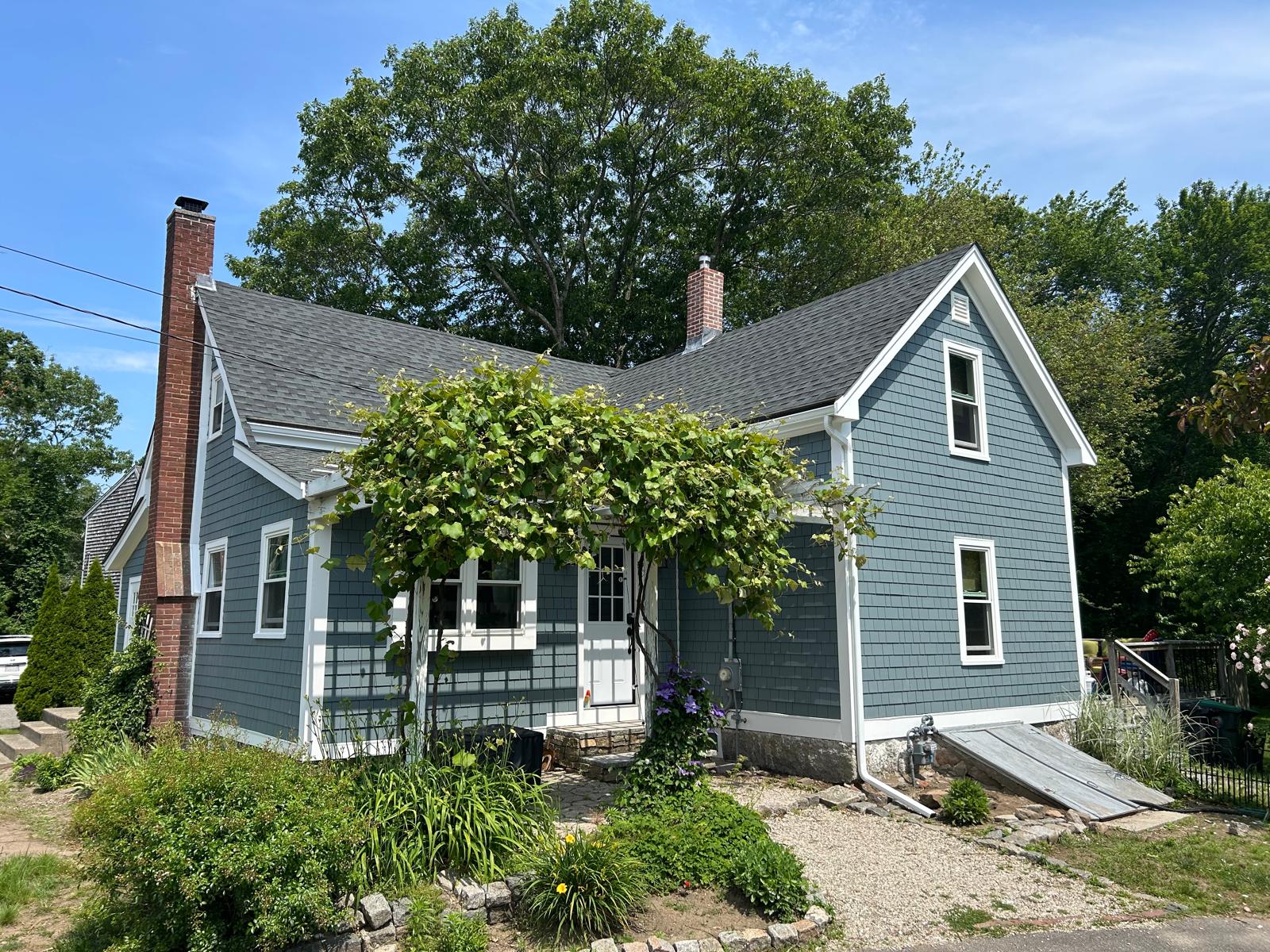
Book an Exterior Rot Inspection on the South Shore
If you are seeing soft trim, rotted fascia, peeling paint, or siding moisture damage, Marine Home Improvement can help. Our team works with homeowners throughout the South Shore and Eastern Massachusetts to inspect exterior damage, identify moisture issues, and recommend the right repair solution.
Do not wait until a small section of rot turns into a larger siding, fascia, or exterior carpentry problem.
Book an exterior rot inspection with Marine Home Improvement today and protect your home before the damage spreads.
FAQ: Wood Rot Around Trim, Fascia, and Siding
What are the first signs of wood rot on a home exterior?
The first signs often include peeling paint, soft wood, dark staining, bubbling surfaces, gaps in caulking, or trim that feels spongy when pressed. These signs are common around windows, doors, fascia boards, and siding seams.
Can rotted fascia boards be repaired?
Sometimes small areas can be repaired, but larger or deeper rot usually requires fascia board replacement. It is also important to check the gutter system because overflowing or leaking gutters often contribute to fascia rot.
Is siding moisture damage serious?
Yes. Siding moisture damage can allow water to reach trim, sheathing, insulation, or interior walls. Even if the siding damage looks minor, it should be inspected before the moisture spreads.
Why does exterior trim rot around windows and doors?
Trim around windows and doors often rots because of failed caulking, poor drainage, peeling paint, or water entering through small gaps. These areas have many joints where moisture can collect.
Who should I call for wood rot repair on the South Shore?
Call an exterior contractor experienced with siding, trim, fascia, gutters, and exterior carpentry. Marine Home Improvement serves South Shore homeowners with exterior inspections and repair solutions for moisture-related damage.