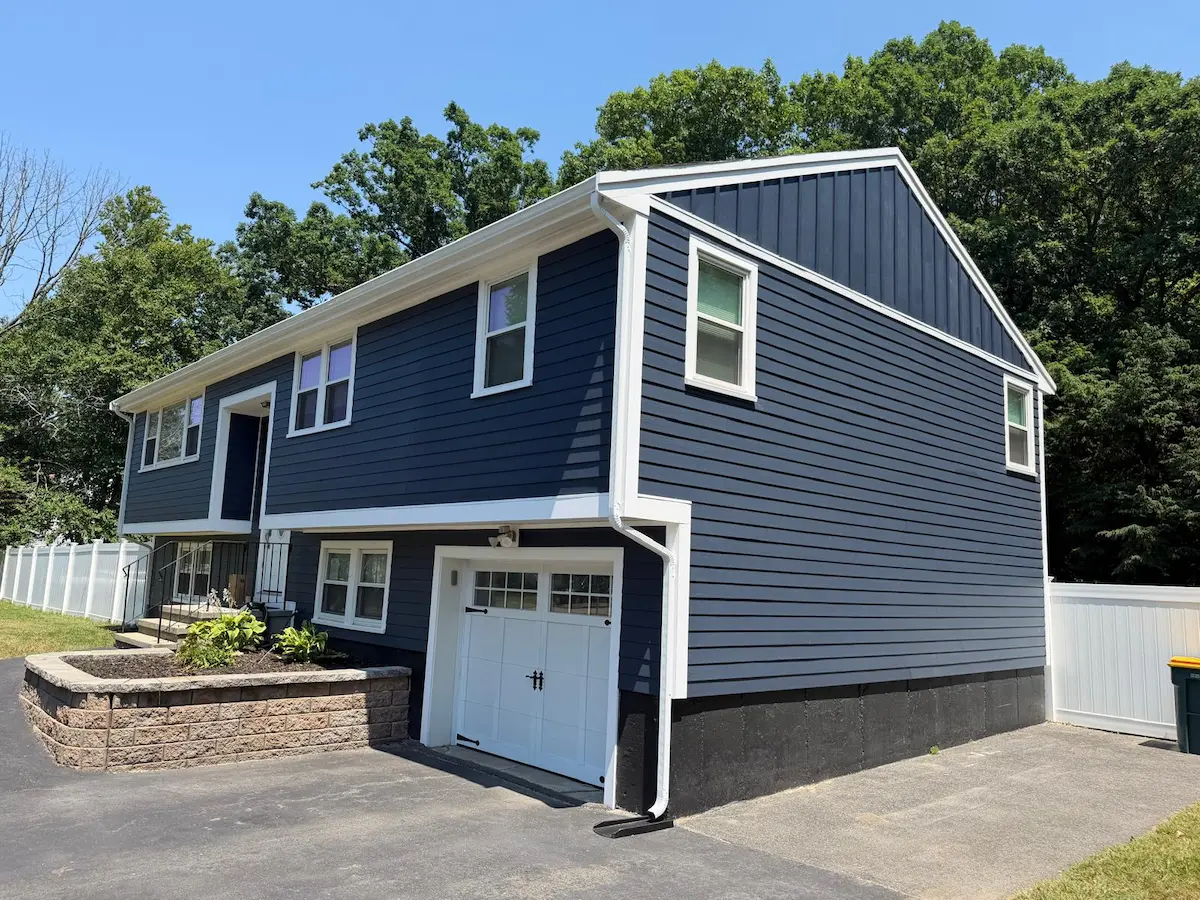
Repair or replace siding on an older home is not always a simple decision. A few damaged clapboards may be suitable for a localized repair, while repeated deterioration, hidden moisture, incompatible materials, or several old siding layers may make complete replacement the more responsible solution.
Older Massachusetts homes often have exterior systems that have changed over many decades. Original wood clapboards may exist beneath vinyl siding. Sections may have been repaired using different materials, and flashing or weather barriers may not meet current installation methods. Before deciding what work to perform, homeowners need to understand both the visible damage and what may be happening behind the exterior.
The goal is not to automatically replace everything or continue applying temporary patches. It is to choose a scope that protects the house, respects its character, and addresses the source of the problem.
Repair or Replace Siding on an Older Home: The Short Answer
A localized repair may make sense when damage is limited to a small area, the surrounding siding is secure, the wall underneath is dry and sound, and a compatible replacement material is available.
Complete replacement may make more sense when damage appears across several walls, previous repairs keep failing, moisture has reached the sheathing, or the existing siding no longer provides a dependable exterior system.
For an older home, age alone should not make the decision. The most important factors are the extent of deterioration, the condition behind the siding, the ability to match existing materials, and whether the proposed repair is likely to last.
Why Siding Work Is Different on an Older Massachusetts Home
Many older homes across Boston, Quincy, Hingham, Weymouth, Duxbury, Plymouth, and the South Shore were built with wood clapboards or cedar shingles. Over time, these homes may have received layers of paint, aluminum or vinyl siding, replacement windows, additions, and localized exterior repairs.
That history can create conditions that are not visible from the ground, including:
- Original siding concealed beneath a newer exterior
- Several materials with different thicknesses and installation methods
- Missing or deteriorated weather-resistant barriers
- Improper flashing around replacement windows and doors
- Old water damage hidden by later repairs
- Discontinued siding profiles that are difficult to match
- Trim, fascia, or sheathing deterioration near the damaged area
This does not mean every older house needs new siding. It means the contractor should evaluate the exterior as a layered system rather than judging only the visible surface.
1. How Much of the Siding Is Actually Damaged?
The extent of damage is the first factor to consider. One split clapboard, a small area of impact damage, or several loose panels may be repairable if the material around them remains in good condition.
Damage found on several sides of the house is different. Widespread splitting, loose sections, open joints, repeated paint failure, or deterioration around numerous windows may indicate that the siding is no longer failing in only one isolated location.
Homeowners should ask the contractor to inspect all elevations of the house, not only the area that first attracted attention. A small visible defect can sometimes be part of a larger pattern, while an alarming-looking section may still be genuinely localized.
For more localized warning signs, particularly after winter weather, see our guide to siding repair signs in Quincy, MA.
2. What Is Happening Behind the Siding?
The visible siding is only the outer layer of the wall. Behind it may be a drainage plane, weather-resistant barrier, sheathing, insulation, and framing. A repair will not last if water continues to enter through failed flashing, open joints, roof edges, gutters, or window and door details.
Possible indications of a deeper moisture problem include:
- Soft exterior trim
- Swollen or warped boards
- Recurring peeling paint
- Dark stains or mildew
- Musty odors
- Damage that returns after previous repairs
When these conditions are present, a contractor may need to remove a controlled section of siding to determine how far the damage extends.
If the sheathing and surrounding wall are sound, the opening may remain suitable for a localized repair. If moisture has spread across a larger area, the scope may need to expand.
Our article about wood rot around trim, fascia, and siding explains where exterior moisture damage commonly appears on South Shore homes.
3. Can the Original Siding Be Preserved and Matched?
Preserving original material can be important to the appearance of an older home. Sound wood clapboards or shingles do not necessarily need to be removed simply because one section has deteriorated.
A skilled repair may be possible when replacement boards can match the original:
- Dimensions
- Exposure
- Texture
- Thickness
- Profile
- Installation method
The repaired area must also be prepared and finished correctly so that it integrates with the existing exterior.
Matching becomes harder when the existing product is discontinued, unusually sized, brittle, or heavily weathered. Even when a technically compatible vinyl panel is available, a new section may look noticeably different from siding that has faded over many years.
If a durable and visually acceptable match cannot be achieved, homeowners must decide whether the appearance of a patch is acceptable or whether a broader replacement would produce a better result.
4. Are Previous Repairs Still Holding Up?
The repair history of the house often reveals whether another patch is likely to be worthwhile.
A single well-executed repair that has remained dry and stable for years is not a reason to replace the entire exterior. However, new problems appearing beside earlier repairs may indicate that deterioration is spreading or that the original cause was never corrected.
Warning signs include:
- Frequent caulking in the same areas
- Recurring paint failure
- Loose replacement panels
- Rot returning around windows
- New deterioration beside previous repairs
- Water stains that reappear after storms
Paying for small repairs every season can eventually cost more without producing a dependable exterior.
Ask whether the proposed repair addresses the source of the damage and how long it can reasonably be expected to perform. A clear answer is more useful than simply choosing the least expensive immediate option.
5. Is the Existing Siding Hiding an Older Exterior?
Some Massachusetts homes have vinyl, aluminum, or another siding material installed over original wood. This can complicate both repairs and replacement.
Installing another layer or closing a damaged section without investigation may conceal deteriorated clapboards, old moisture damage, or sheathing problems.
On the other hand, removing every layer may not be necessary when the existing assembly is dry, stable, and compatible with the planned work.
The contractor should explain:
- What materials appear to be present
- Whether the underlying wall can be evaluated
- How windows, doors, corners, and roof intersections are flashed
- Whether damaged layers must be removed
- How the proposed work will manage rain and moisture
The correct approach depends on the actual wall condition and the installation requirements of the selected material—not simply on the number of layers.
6. What Are Your Long-Term Plans for the Home?
The homeowner’s goals should also influence the decision.
A carefully matched repair may be appropriate when the exterior is otherwise healthy and preserving original character is the priority.
Replacement may offer better value when the homeowner is already planning:
- New exterior trim
- Exterior insulation
- Window or door replacement
- A different siding material
- A complete curb-appeal update
- Repairs on several walls
- Gutter, soffit, or fascia replacement
Coordinating related work can help homeowners avoid removing and reinstalling recently completed sections later.
Older homes do not need to lose their traditional appearance during replacement. Wood siding can preserve original character, while fiber cement can reproduce many clapboard and shingle styles with different maintenance requirements.
Our fiber cement vs. wood siding comparison explores that material decision in greater detail.
When a Localized Siding Repair Usually Makes Sense
A professional repair may be the right choice when:
- Damage is limited to one small, clearly defined area
- The surrounding boards or panels remain secure
- The sheathing and wall behind the damage are dry
- The cause of the problem can be corrected
- Compatible replacement material is available
- Previous repairs are not repeatedly failing
- The repair will preserve the home’s appearance
The repair should include more than replacing the visible board. Flashing, sealant, trim, and nearby drainage details should be checked so that the same damage does not return.
When Complete Siding Replacement May Be More Practical
Replacement may be the stronger option when:
- Damage affects several elevations
- Moisture or rot extends beyond one repairable section
- The siding has become brittle, unstable, or difficult to match
- Previous repairs continue to fail
- Several incompatible siding materials have accumulated
- The wall needs broader weather-barrier or flashing corrections
- Related exterior renovations are already planned
Replacement also provides access to areas that cannot be evaluated while the old siding remains in place. This can be especially valuable when an older home has an uncertain renovation history or recurring moisture problems.
For planning purposes, our separate guide explains how long siding replacement takes in Massachusetts.
Questions to Ask Before Approving the Work
Whether the recommendation is repair or replacement, homeowners should receive a clear explanation of the proposed scope.
Ask the contractor:
- Is the damage isolated or present elsewhere on the house?
- What caused the deterioration?
- Is there evidence of moisture behind the siding?
- Can the existing profile and appearance be matched?
- What happens if concealed rot is discovered?
- Will windows, doors, flashing, trim, and gutters be inspected?
- What preparation and weather protection are included?
- What are the limitations and expected life of the repair?
- What product and workmanship warranties apply?
A detailed estimate should distinguish confirmed work from possible repairs that can only be priced after the exterior is opened. This helps homeowners compare proposals without being surprised by how concealed damage will be handled.
Why Choose Marine Home Improvement?
Since 2001, Marine Home Improvement has been a trusted roofing and exterior remodeling specialist serving homeowners across Massachusetts. Our team delivers high-quality roof replacements, durable siding installations, custom decks, and professional window upgrades—always with clear communication and a commitment to excellent workmanship.
We use premium materials from trusted suppliers and provide detailed, transparent estimates so you always know what to expect. With strong warranties on both labor and products, you can feel confident your home is in expert hands.
Our BBB accreditation and consistent 5-star feedback on Facebook and Yelp highlight our dedication to reliability and customer satisfaction. When you choose Marine Home Improvement, you’re choosing quality, honesty, and long-lasting results.
Find Out What Your Older Home Actually Needs
Do not commit to repeated patches or a complete replacement before the exterior has been properly evaluated.
Marine Home Improvement can inspect the siding, look for evidence of underlying damage, and explain which scope makes sense for the home’s condition and renovation history.
Request your free siding assessment or call (781) 384-2021 to discuss your older Massachusetts home.