
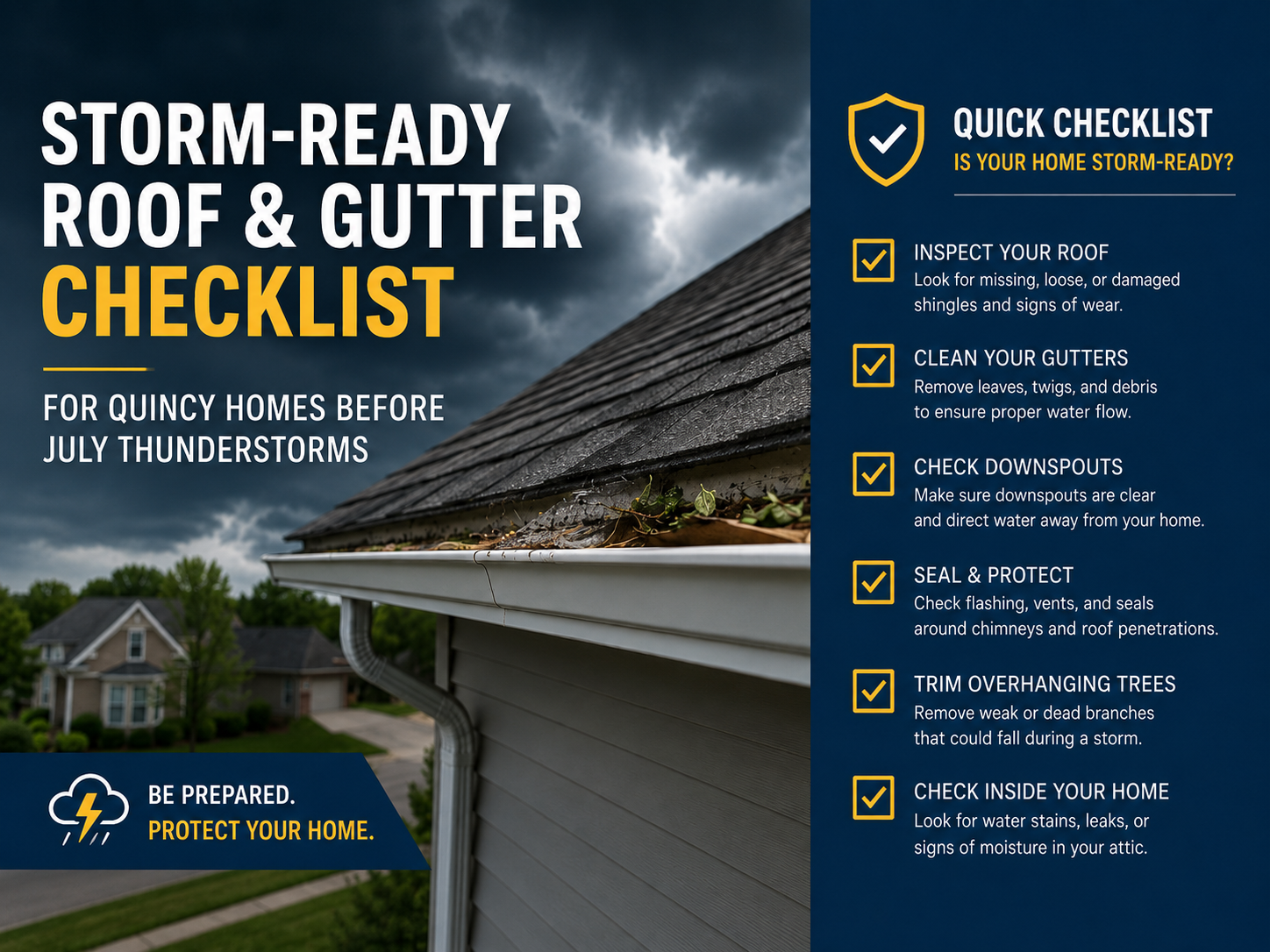
July thunderstorms can arrive quickly in Quincy, bringing heavy rain, wind, clogged gutters, and sudden roof leaks. For homeowners near the coast, summer storms can put extra pressure on roofing, fascia, gutters, downspouts, siding, and attic ventilation.
The good news is that many storm-related problems can be reduced with a simple pre-storm inspection. This storm-ready roof and gutter checklist for Quincy MA homeowners will help you spot warning signs before July thunderstorms turn small issues into expensive water damage.
Why Quincy Homes Need Storm Preparation Before July
Quincy homes deal with a mix of coastal air, summer humidity, heavy rain, and occasional strong winds. Even if your roof looks fine from the ground, small problems can become noticeable once a thunderstorm hits.
Loose shingles, clogged gutters, weak flashing, and poorly draining downspouts can all allow water to back up or enter the home. Because Marine Home Improvement already covers broader topics like coastal roof damage and gutter replacement, this checklist focuses specifically on what Quincy homeowners should check before summer thunderstorms, not whether you need a full replacement.
1. Check for Loose, Missing, or Lifted Shingles
Start by looking at your roof from the ground. Do not climb onto the roof yourself, especially before storm season.
Look for:
- Missing shingles
- Curled or lifted shingles
- Dark patches where granules may be missing
- Shingles that look uneven or out of place
- Debris sitting in roof valleys
Even one vulnerable area can allow wind-driven rain to get underneath the roofing system. If your Quincy home has already dealt with storm damage, missing shingles, or recurring roof concerns, it is better to inspect before July storms instead of after water appears indoors.
2. Clean Gutters Before Heavy Rain Arrives
Gutters are one of the most important parts of storm preparation. When gutters are clogged with leaves, twigs, roof granules, or debris, rainwater cannot drain properly.
Clogged gutters can cause:
- Overflow near the foundation
- Water backing up under roof edges
- Fascia and trim moisture damage
- Basement or crawlspace water issues
- Staining on siding
- Landscape erosion
This post should not compete with a gutter replacement article. The goal here is simple: make sure your gutters are clean and draining before a thunderstorm tests them.
3. Make Sure Downspouts Move Water Away From the Home
A clean gutter system will not help much if downspouts dump water too close to the foundation.
Before July thunderstorms, check that downspouts:
- Are firmly attached
- Are not crushed, blocked, or disconnected
- Direct water several feet away from the home
- Do not drain toward walkways, basement windows, or low spots
- Have extensions where needed
During a heavy storm, roof runoff adds up fast. If downspouts are not moving water away from your home, water can collect around the foundation and increase the risk of moisture problems.
4. Inspect Fascia, Soffits, and Roof Edges
The edges of your roof are especially important before storm season because this is where gutters, fascia, soffits, and shingles all meet.
Look for:
- Soft or rotting fascia boards
- Peeling paint near gutters
- Gaps between gutters and fascia
- Stains under roof edges
- Sagging gutter sections
- Insects or birds entering soffit openings
If gutters are pulling away from the fascia, water may spill behind the gutter instead of flowing through it. This can lead to hidden wood rot and exterior water damage.
5. Check Flashing Around Chimneys, Vents, and Skylights
Flashing helps seal roof areas where water is most likely to enter. In Quincy homes, flashing around chimneys, vents, skylights, and roof transitions should be checked before heavy summer rain.
Warning signs include:
- Rusted flashing
- Cracked sealant
- Gaps around roof penetrations
- Stains near chimneys or ceiling corners
- Water marks in the attic
- Damp insulation
Small flashing issues can be hard to spot from the ground, but they are common leak sources during wind-driven rain.
6. Look Inside the Attic After Heavy Humidity or Rain
Storm preparation should not stop outside. Your attic can reveal early signs of roof or ventilation issues.
Check for:
- Damp insulation
- Musty odors
- Dark stains on roof decking
- Water marks around vents or chimneys
- Mold-like discoloration
- Daylight showing through roof boards
If you notice signs of moisture before a storm, schedule an inspection quickly. Thunderstorms can make an existing weak spot worse.
7. Trim Branches Near the Roofline
Overhanging branches can scrape shingles, drop debris into gutters, and break during storms. Before July thunderstorms arrive, trim branches that hang over your roof or sit too close to gutters.
This helps reduce:
- Gutter clogs
- Roof surface damage
- Falling limb damage
- Moisture buildup from shaded roof areas
- Debris collecting in roof valleys
For larger trees or branches near utility lines, contact a qualified tree professional.
8. Check for Drainage Problems Around the Home
Roof and gutter storm readiness also includes ground-level drainage. After gutters and downspouts move water off the roof, that water still needs somewhere safe to go.
Walk around your home and look for:
- Low spots near the foundation
- Soil washing away
- Water pooling near steps or basement windows
- Splash marks on siding
- Downspouts draining toward the house
If water collects around the foundation after rain, your drainage setup may need adjustment before stronger storms arrive.
9. Watch for Early Interior Warning Signs
Some storm-readiness issues show up inside the home before they become obvious outside.
Look for:
- Ceiling stains
- Bubbling paint
- Damp drywall
- Musty smells
- Stains around windows or exterior walls
- Water spots near attic access points
Do not wait until the next thunderstorm to see if the problem gets worse. A small stain can indicate a roof, flashing, gutter, or siding drainage issue.
10. Schedule a Storm-Readiness Inspection Before July
A professional inspection can help identify problems that are easy to miss from the ground. This is especially helpful if your Quincy home has older gutters, past roof repairs, mature trees nearby, or any signs of moisture.
A storm-readiness inspection can check:
- Roof surface condition
- Shingles and roof edges
- Gutters and downspouts
- Fascia and soffits
- Flashing and roof penetrations
- Attic moisture signs
- Drainage concerns
- Areas vulnerable to wind-driven rain
Instead of waiting for an emergency leak, a pre-storm inspection helps you prepare before July thunderstorms arrive.
Why Choose Marine Home Improvement?
Since 2001, Marine Home Improvement has been a trusted roofing and exterior remodeling specialist serving homeowners across Massachusetts. Our team delivers high-quality roof replacements, durable siding installations, custom decks, and professional window upgrades—always with clear communication and a commitment to excellent workmanship.
We use premium materials from trusted suppliers and provide detailed, transparent estimates so you always know what to expect. With strong warranties on both labor and products, you can feel confident your home is in expert hands.
Our BBB accreditation and consistent 5-star feedback on Facebook and Yelp highlight our dedication to reliability and customer satisfaction. When you choose Marine Home Improvement, you’re choosing quality, honesty, and long-lasting results.
Get Your Quincy Home Ready Before July Thunderstorms
Summer storms can expose small roofing, gutter, and drainage problems quickly. Before July thunderstorms arrive, take time to check your roof, clean your gutters, inspect downspouts, and look for early signs of water damage.
Marine Home Improvement can help Quincy homeowners prepare with a professional storm-readiness inspection.
FAQ: Storm-Ready Roof and Gutter Checklist for Quincy MA
How often should Quincy homeowners clean their gutters?
Most homes should have gutters checked at least twice a year, but homes with nearby trees may need more frequent cleaning. Before July thunderstorms, it is smart to confirm that gutters and downspouts are clear and draining properly.
Can clogged gutters cause roof leaks?
Yes. When gutters are clogged, water can back up near the roof edge and overflow behind the gutter. Over time, this can contribute to fascia damage, roof edge moisture, and interior water issues.
What roof areas are most vulnerable during thunderstorms?
Common weak spots include missing shingles, roof valleys, flashing around chimneys and vents, skylights, gutters, fascia boards, and areas where water drains slowly.
Should I inspect my roof myself before a storm?
You can safely inspect from the ground and inside the attic, but avoid climbing onto the roof. A professional inspection is safer and more thorough, especially if you suspect storm damage, leaks, or drainage problems.
What should I do if I notice a ceiling stain before a thunderstorm?
Do not ignore it. A ceiling stain may indicate an active or previous leak. Schedule an inspection before the next storm to reduce the risk of more water entering your home.