
Some problems are easy to spot, such as missing or cracked siding panels. Others are less obvious and may only become noticeable when water stains, drafts, or wood deterioration appear.
Recognizing the warning signs early can help you prevent further damage and determine whether a localized repair or larger siding replacement is necessary.
If you’re inspecting your home after a harsh winter, here are seven signs you may need siding repair in Quincy, MA and what you should do next.
Cracked or Warped Siding Panels
Cracks, splits, and distorted siding panels are among the most visible signs of exterior damage.
Temperature fluctuations cause building materials to expand and contract. Over time, aging, impact, and existing installation problems can make siding more vulnerable to cracking or warping.
Look for:
- Cracks or splits in vinyl siding
- Panels that appear bent, warped, or buckled
- Gaps between adjoining panels
- Sections separating from the exterior wall
Even relatively small openings can allow wind-driven rain to reach areas that should remain protected.
When repair may be enough: If damage is limited to a few panels and the surrounding siding remains in good condition, replacing the affected sections may be possible.
However, any suspected water intrusion should be investigated before the exterior is closed again.
Loose or Missing Siding After Winter Winds
Quincy’s coastal location exposes some homes to strong winds during winter storms and nor’easters.
Wind can loosen siding panels, particularly where fasteners, joints, or older materials have weakened.
Following a significant storm, inspect the exterior from the ground for panels that have shifted, lifted, or detached.
Missing siding may expose the underlying wall assembly to rain, snow, and moisture.
Common warning signs include:
- Panels hanging away from the wall
- Missing sections of siding
- Loose trim around windows or corners
- Visible gaps where panels connect
If you notice loose or missing siding, schedule an assessment promptly. Avoid climbing ladders or attempting to remove unstable panels yourself.
Water Stains or Moisture Inside Your Home
Not every siding problem is visible from outside.
Water stains, peeling paint, damp drywall, and persistent musty odors may indicate moisture entering the building envelope.
Damaged siding or flashing can sometimes contribute to these problems, particularly during wind-driven rain.
However, interior water stains can also originate from roofing, windows, plumbing, or other sources.
Watch for:
- Yellow or brown stains on interior walls
- Bubbling or peeling paint
- Damp areas around windows
- Persistent musty smells
- Water damage that appears after storms
A professional assessment should identify the actual source of moisture before siding repairs begin.
Recurring Mold or Mildew on Exterior Siding
Coastal humidity, shade, and persistent moisture can contribute to mold, mildew, or dark staining on exterior siding.
Surface growth does not necessarily indicate damaged siding. In some cases, appropriate cleaning and improved drying conditions may address the problem.
However, recurring staining deserves closer attention when accompanied by loose panels, deteriorating trim, or moisture problems indoors.
Pay particular attention to:
- Areas beneath windows
- Siding near roof-to-wall intersections
- Exterior corners and joints
- Shaded walls that remain damp
- Areas with recurring water runoff
If moisture is entering behind the siding, cleaning the surface alone will not correct the underlying problem.
Unusual Drafts or Higher Heating Costs
Damaged siding does not automatically cause higher heating bills. However, gaps in the exterior wall assembly, compromised insulation, and air leakage can contribute to drafts and heat loss.
If you’ve noticed unusually cold areas near exterior walls or windows, it may be worth examining the surrounding building materials.
Possible causes include deteriorated weatherstripping, gaps around windows, damaged insulation, or other air-sealing problems.
An assessment can help determine whether siding-related repairs are needed or whether the issue lies elsewhere.
Soft, Rotting, or Deteriorating Wood
Moisture can gradually damage wood siding, exterior trim, and the materials beneath the siding.
Older homes and areas with recurring water exposure may be particularly vulnerable.
Inspect visible areas around:
- Exterior window and door trim
- The bottom edges of wood siding
- Corners and siding joints
- Areas beneath gutters and downspouts
- Locations where paint repeatedly peels or blisters
Soft, crumbling, or visibly deteriorated wood may indicate decay.
The appropriate repair depends on how far the damage extends.
A small damaged trim section may be relatively straightforward to replace, while deterioration affecting the underlying wall assembly can require more extensive work.
Fading, Peeling, or Other Visible Deterioration
Fading alone does not necessarily mean your siding needs replacement.
However, widespread cracking, brittle panels, peeling finishes on wood, or repeated deterioration may indicate that exterior materials are approaching the end of their useful service life.
When evaluating older siding, consider whether damage is limited to a few sections or affects multiple exterior walls.
If repairs are becoming frequent or matching materials are no longer available, partial or full replacement may be worth considering.
Why Winter Weather Can Be Hard on Quincy Homes
Homes in Quincy can experience a combination of coastal wind exposure, winter precipitation, moisture, and fluctuating temperatures.
Properties in more exposed locations may receive greater amounts of wind-driven rain, while shaded areas may take longer to dry.
Repeated storms can reveal weaknesses around exterior joints, flashing, windows, trim, and siding panels.
Not every home experiences the same conditions, and siding performance depends on material, installation quality, age, and maintenance.
Inspecting the exterior after significant storms and addressing visible damage can help reduce the risk of more extensive problems.
Should You Repair or Replace Your Siding?
The decision between siding repair and replacement depends on several factors, including the type of siding, the extent of deterioration, and the condition of the underlying wall.
When Siding Repair May Make Sense
Repair may be appropriate when:
- Damage affects only a small number of panels
- The surrounding siding remains structurally sound
- Matching replacement materials are available
- Moisture damage is limited
- The underlying wall assembly is in good condition
When Siding Replacement May Be Worth Considering
A larger replacement may be more practical when:
- Multiple exterior walls show deterioration
- Siding is cracking or failing in numerous areas
- Matching materials are unavailable
- Significant moisture damage exists beneath the exterior
- Repeated repairs are no longer cost-effective
A professional assessment can help determine whether a targeted repair or broader replacement is appropriate for your home.
Example of a Massachusetts Siding Replacement Project
Marine Home Improvement completed a HardiePlank siding replacement project using CobbleStone-colored siding in Hanover, Massachusetts.
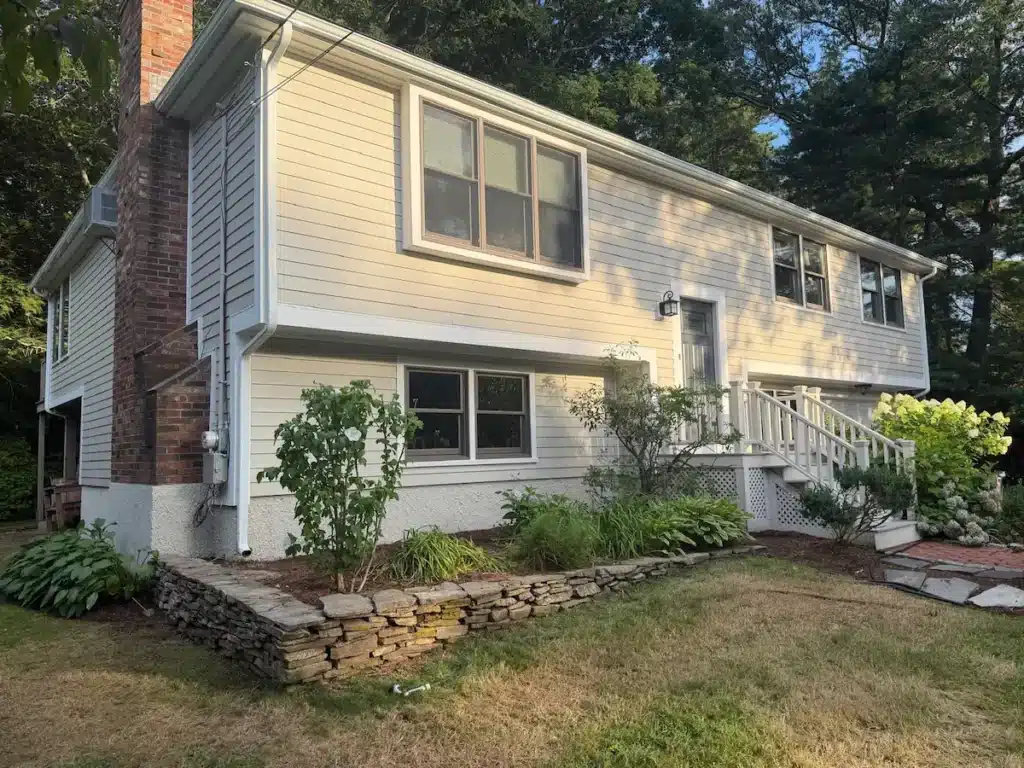
HardiePlank siding in CobbleStone color installed by Marine Home Improvement during a siding replacement project in Hanover, Massachusetts.
See our HardiePlank siding replacement project in Hanover, MA for an example of our completed siding work.
When Should Quincy Homeowners Schedule a Siding Assessment?
Consider requesting a professional siding assessment if your home has experienced significant storm damage or you notice:
- Cracked, loose, or missing siding
- Deteriorating wood or exterior trim
- Recurring moisture problems
- Water stains near exterior walls
- Damage affecting multiple sections of siding
Photographing visible damage from a safe location can be helpful when explaining the problem to a contractor.
Avoid removing siding or climbing onto elevated areas without the appropriate training and equipment.
Identifying the extent of damage before beginning repairs helps avoid overlooking moisture problems beneath the surface.
Siding Repair and Replacement Services in Quincy, MA
Marine Home Improvement provides siding and exterior remodeling services to homeowners in Quincy and throughout Massachusetts.
Our siding services include work involving vinyl, fiber cement, and wood siding.
Whether your home has localized storm damage, deteriorating trim, or older siding that may need replacement, the right solution depends on the existing materials and the condition of the exterior.
Learn more about our siding installation, repair, and replacement services in Massachusetts.
Protect Your Home From Siding Damage
Cracked panels, loose siding, and moisture problems shouldn’t be ignored. Addressing exterior damage early can help prevent more extensive repairs.
Marine Home Improvement provides siding repair and replacement services in Quincy and throughout Massachusetts.
Whether you’re concerned about storm damage or considering a larger siding project, contact us to discuss your needs and request an estimate.
How do I know if my siding needs repair after winter?
Look for cracked or loose panels, visible gaps, soft wood, and signs of moisture damage. A professional assessment can help determine whether the problem affects only the exterior material or extends beneath it.
Can winter storms damage vinyl siding?
Yes. Strong winds, flying debris, impact, and temperature-related movement can contribute to cracking or loosened panels. The siding's age, condition, and installation also affect its resistance to damage.
Should damaged siding be repaired immediately?
Missing or visibly damaged siding should be assessed promptly, particularly if the underlying wall is exposed to moisture. The urgency depends on the extent of damage and whether water is entering the building.
Can siding damage cause water leaks inside the house?
Damaged siding or surrounding flashing can contribute to water intrusion. However, leaks can also originate from windows, roofing, and other sources. Identifying the actual entry point is essential.
Is it better to repair or replace damaged siding?
Localized repairs may be appropriate when the surrounding material remains in good condition. Replacement may be more practical when deterioration is widespread, underlying moisture damage is extensive, or matching materials cannot be found.