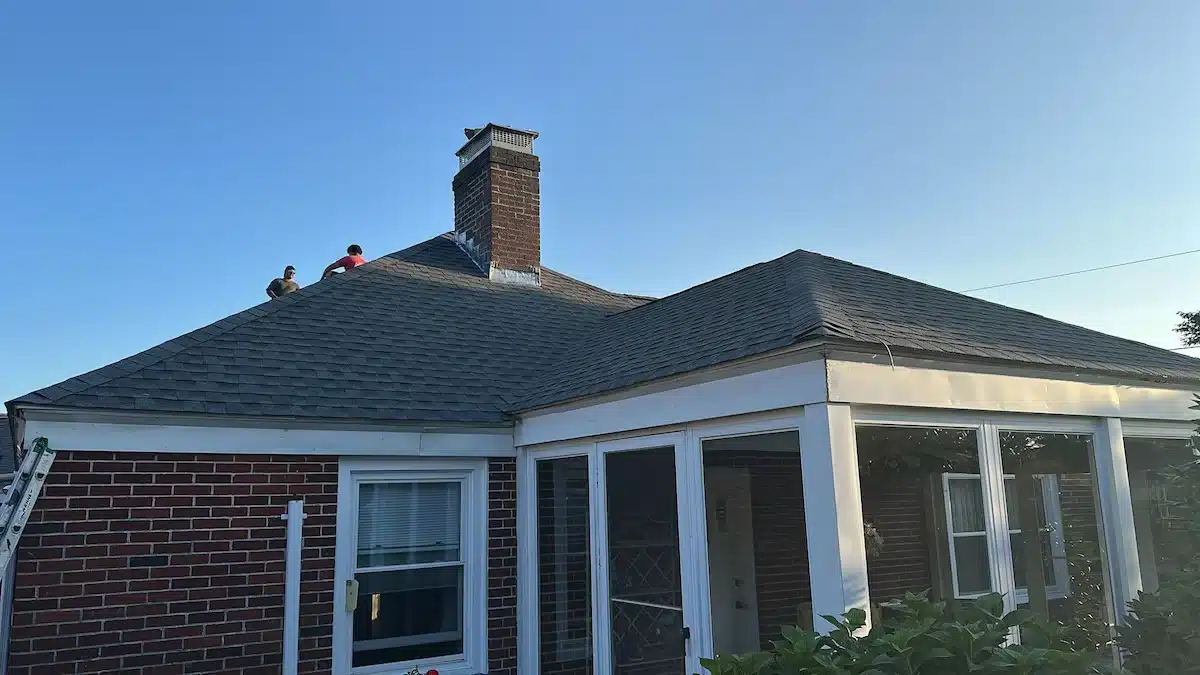
Roof valley leak repair MA homeowners need often begins with a water stain, damp attic insulation, or a ceiling leak that appears after heavy rain. Roof valleys are the angled channels where two roof slopes meet. Because they direct a large amount of water toward the gutters, even a small problem in this area can allow water beneath the shingles and into the roof deck.
For homes across Boston, the South Shore, Plymouth County, and coastal Massachusetts, wind-driven rain, seasonal storms, aging shingles, and clogged gutters can all make roof valleys more vulnerable. A professional inspection can identify whether the issue is limited to the valley materials or whether moisture has already affected the decking and surrounding roof structure.
Why roof valleys are more likely to leak
A roof valley handles more runoff than most other areas of a roofing system. During a heavy rainstorm, water from two roof sections is concentrated into one channel before it reaches the gutter.
That concentrated flow means a valley can fail when:
- Shingles near the valley are cracked, loose, or worn
- Valley flashing or underlayment has deteriorated
- Nails were placed too close to the water channel
- Debris collects and slows drainage
- A nearby gutter is clogged or pulling away
- Ice, snow, or repeated freeze-thaw cycles damage the roofing layers
- An older roof no longer sheds water effectively
Unlike a small shingle issue on an open roof slope, a damaged valley can let in a significant amount of water quickly.
Signs you may need roof valley leak repair MA homeowners should not ignore
A roof valley problem is not always visible from the ground. However, these signs should prompt a professional roof inspection:
Water stains near a roof intersection
Ceiling stains that appear below the point where two roof slopes meet are a common warning sign. The water may travel along framing before it becomes visible indoors, so the stain is not always directly below the leak.
Leaks during heavy or wind-driven rain
If a leak appears only during a strong storm, the roof valley may have a gap that allows water in only when drainage volume is high or rain is pushed beneath shingles by wind.
Missing, curled, or damaged shingles near the valley
Shingles around valleys experience heavy water flow and can wear faster than shingles elsewhere on the roof. Look from the ground for uneven edges, lifted shingles, exposed fasteners, or debris buildup.
Damp attic insulation or dark roof decking
A safe attic check after rainfall may reveal damp insulation, darkened wood, or a musty odor. These are signs that water may be entering before it reaches the ceiling below.
Granules collecting in the gutter below a valley
Asphalt-shingle granules naturally shed over time, but an unusual concentration beneath a valley can indicate localized wear. Granule loss exposes shingles to faster deterioration.
What causes a roof valley to fail?
Roof valleys typically fail because water has found a way beneath the roof’s outer protective layer. The exact repair depends on the cause and the condition of the surrounding roof.
Aging valley materials
Older shingles, flashing, and underlayment eventually lose their ability to direct water away from the roof deck. Repairs may be possible when the damage is isolated, but widespread wear can point to a larger roof-replacement decision.
Improper installation
A valley needs correct underlayment, properly layered shingles, and a clear drainage path. Fasteners installed too close to the center of the valley, poor shingle overlap, or inadequate protection below the shingles can create leak points.
Debris and drainage problems
Leaves, pine needles, branches, and roof granules can slow water as it moves through the valley. When water backs up, it can work beneath shingles. Clogged gutters below the valley make the situation worse by preventing runoff from leaving the roof quickly.
Storm and winter damage
Massachusetts storms can lift shingle edges, damage flashing, and drive rain into weak areas. Winter ice and repeated freeze-thaw cycles can also widen small gaps and weaken already-aging materials.
How professionals diagnose a roof valley leak
A proper roof valley inspection should identify the source of the water—not simply cover the visible symptom.
Marine Home Improvement’s inspection process can include:
- Checking shingles and valley edges for wear or lifting
- Looking for exposed fasteners, damaged flashing, or failed sealant
- Inspecting the gutter and downspout below the valley
- Examining roof decking and attic areas for moisture damage
- Checking nearby penetrations, walls, chimneys, and roof transitions
- Determining whether a targeted repair is appropriate or whether the roof has broader age-related issues
This matters because water can enter at one point and travel before becoming visible inside the home.
Can a roof valley be repaired without replacing the whole roof?
Sometimes. A localized repair may be appropriate when the rest of the roof is in good condition and the problem is limited to a small area of damaged shingles, flashing, or underlayment.
A full roof replacement may be the better long-term option when:
- The roof is nearing the end of its service life
- Shingle deterioration extends beyond the valley
- Several leak points have developed
- Roof decking has been damaged by recurring moisture
- Previous repairs have not resolved the problem
- The roof has widespread granule loss, curling, or missing shingles
An inspection gives you a clearer answer than attempting a temporary patch. Covering a leak without addressing the drainage and underlying roofing layers can allow hidden moisture damage to continue.
What to do if you notice a roof valley leak
If water is actively entering your home:
- Move furniture and valuables away from the affected area.
- Place a container under active drips.
- Take photos of the interior damage for your records.
- Do not walk on a wet or storm-damaged roof.
- Schedule a professional roof inspection as soon as conditions are safe.
If you have active dripping, a sagging ceiling, or rapidly spreading water damage, treat it as urgent. Our emergency roof leak guidance explains the signs that require faster action.
Preventing future roof valley leaks
No roof is maintenance-free, but a few practical steps can reduce valley-related problems:
- Keep gutters and downspouts clear, especially below roof valleys.
- Have storm damage inspected after strong wind or heavy rain.
- Watch for shingle damage and granule buildup.
- Trim branches that drop debris onto the roof.
- Schedule an inspection before small stains or occasional drips become major interior repairs.
- Address nearby flashing concerns promptly; roof-to-wall transitions require their own specialized repair approach.
Why Choose Marine Home Improvement?
Since 2001, Marine Home Improvement has been a trusted roofing and exterior remodeling specialist serving homeowners across Massachusetts. Our team delivers high-quality roof replacements, durable siding installations, custom decks, and professional window upgrades—always with clear communication and a commitment to excellent workmanship.
We use premium materials from trusted suppliers and provide detailed, transparent estimates so you always know what to expect. With strong warranties on both labor and products, you can feel confident your home is in expert hands.
Our BBB accreditation and consistent 5-star feedback on Facebook and Yelp highlight our dedication to reliability and customer satisfaction. When you choose Marine Home Improvement, you’re choosing quality, honesty, and long-lasting results.
Schedule roof valley leak repair in Massachusetts
A roof valley leak can start small, but concentrated water flow means the damage can spread quickly into the roof deck, attic insulation, ceilings, and walls.
Marine Home Improvement provides roof inspections and repairs for homeowners throughout Massachusetts, including Boston, Quincy, Weymouth, Hanover, Marshfield, Plymouth, Duxbury, Scituate, and surrounding South Shore communities. If you have a ceiling stain, storm-related leak, or visible wear near a roof valley, request an inspection before the next heavy rain.