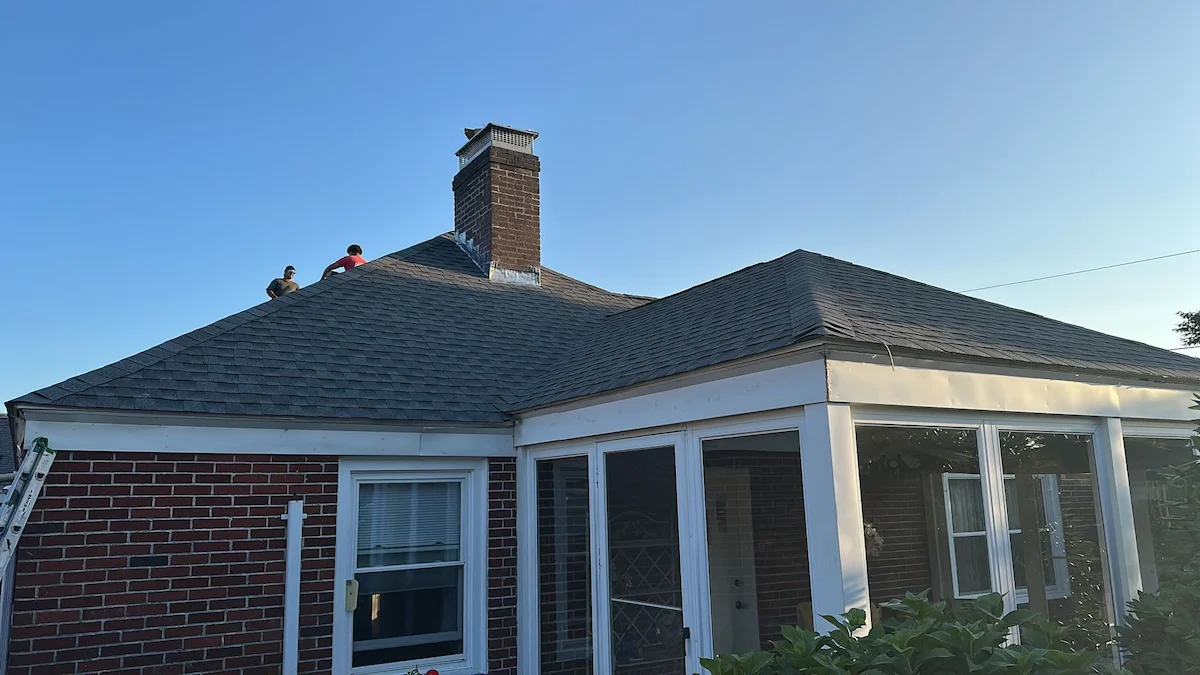
A roof leak around chimney flashing can begin as a small stain but quickly spread into roof decking, insulation, drywall, and interior walls. Chimneys, skylights, vent pipes, and other roof penetrations are among the most vulnerable parts of a roofing system because every opening requires properly installed flashing and waterproofing.
Massachusetts homes face wind-driven rain, snow, ice, coastal moisture, and repeated freeze-thaw cycles. These conditions can loosen flashing, crack seals, deteriorate vent boots, and expose small gaps around roof penetrations.
The water stain you see inside may not be directly below the actual leak. Water can travel along roof decking, rafters, pipes, or framing before appearing on a ceiling. That is why correctly identifying the source is essential before beginning repairs.
Why Roof Penetrations Are Common Leak Points
A continuous roof surface is designed to move water toward the gutters. Chimneys, skylights, plumbing vents, exhaust vents, and other openings interrupt that surface.
Flashing and waterproof underlayment help redirect water around these openings. If those components are damaged, incorrectly installed, or deteriorating, rain and melting snow can enter the roof system.
Common warning signs include:
- Brown or yellow ceiling stains
- Damp insulation in the attic
- Peeling or bubbling paint
- Musty odors
- Water marks near a chimney or skylight
- Dripping after heavy or wind-driven rain
- Dark or rotted roof decking
- Recurring stains that disappear during dry weather
Even if the leak appears small, the hidden moisture may be affecting a much larger area.
What Causes a Roof Leak Around Chimney Flashing?
A chimney passes through several layers of the roof, making the surrounding area particularly vulnerable. The roofing materials and masonry also expand and contract at different rates as temperatures change.
Damaged Step or Counter Flashing
Step flashing is installed where the roof meets the sides of the chimney. Counter flashing is integrated with the chimney masonry and overlaps the step flashing.
If either layer becomes loose, corroded, bent, or separated, water can enter the joint between the chimney and roof. Flashing problems can also develop when roofing work is completed without properly rebuilding the flashing system.
Adding surface caulk or roof cement may temporarily slow a leak, but it does not replace properly installed flashing.
Deteriorated Mortar or Chimney Masonry
Sometimes the water is entering through the chimney rather than through the shingles. Cracked mortar joints, porous bricks, a damaged chimney crown, or a loose cap can allow water into the masonry.
The moisture may then travel downward and appear inside the attic or ceiling, making the problem look like a conventional roof leak.
Missing or Inadequate Chimney Cricket
A chimney cricket is a small raised structure built on the upper side of a wide chimney. It divides water and directs it around the chimney instead of allowing rain, leaves, snow, and ice to collect behind it.
Without adequate drainage, standing water and debris can accelerate flashing deterioration and increase the likelihood of leaks.
Damaged Shingles Around the Chimney
Missing, lifted, cracked, or improperly cut shingles can expose the underlayment surrounding the chimney. Water may then travel beneath the shingles and enter through nail holes or gaps in the flashing.
What Causes a Roof Leak Around a Skylight?
Skylights require their own flashing system to direct water around the frame. A leak may result from damaged flashing, installation problems, deteriorated seals, or roofing wear around the skylight.
Common causes include:
- Loose or corroded skylight flashing
- Cracked or missing shingles near the frame
- Deteriorated seals
- Improper installation
- Debris preventing proper drainage
- An aging skylight assembly
- Condensation being mistaken for an exterior leak
Condensation usually develops when warm, humid indoor air meets a cold skylight surface. A true leak is more likely to worsen during or immediately after rain.
Homeowners experiencing a skylight-specific problem can learn more in our guide to common causes of a leaking skylight in Plymouth.
What Causes a Vent Pipe Roof Leak?
Plumbing vent pipes usually pass through the roof with a metal or plastic flange and a flexible rubber boot. The boot creates a seal around the pipe, but constant exposure to sunlight and temperature changes can cause it to crack or split.
A vent pipe roof leak can result from:
- A cracked or deteriorated rubber boot
- A rusted or damaged flashing flange
- Exposed or backed-out fasteners
- Improperly installed shingles
- Gaps between the pipe and flashing
- Storm or impact damage
- Previous temporary repairs that have failed
Water entering around a vent pipe may follow the pipe downward before reaching the ceiling. This can make the leak appear farther inside the home than expected.
How to Tell Which Roof Penetration Is Leaking
The location and timing of the water can provide clues, but they do not always confirm the source.
For example:
- Water beside a chimney after wind-driven rain may indicate side flashing damage.
- Water appearing above the chimney may point to the back pan, cricket, or masonry.
- Moisture around a skylight only during cold weather may be condensation.
- Dripping beside a plumbing vent may indicate a deteriorated vent boot.
- Leaks in several rooms may indicate broader roofing or underlayment damage.
A professional inspection should evaluate both the exterior roof and the attic. The inspection may include the flashing, shingles, chimney masonry, skylight frame, vent boots, underlayment, decking, and nearby drainage patterns.
Because accessing a wet or steep roof is dangerous, homeowners should not attempt to inspect these areas by climbing onto the roof.
Can a Leak Around a Chimney, Skylight, or Vent Be Repaired?
Many isolated roof-penetration leaks can be repaired without replacing the entire roof.
A localized repair may be appropriate when:
- The leak has one identifiable source
- Most shingles remain in good condition
- Flashing damage is limited to one area
- The roof decking has not suffered widespread rot
- The roof is not near the end of its expected lifespan
- Previous repairs have not repeatedly failed
Possible repairs include replacing chimney flashing, installing a new vent boot, repairing nearby shingles, correcting a skylight flashing system, or addressing damaged chimney masonry.
However, broader roof replacement may make more sense when the roof has multiple leaks, widespread shingle deterioration, soft decking, repeated flashing failures, or significant age-related wear.
Our roof repair versus replacement guide explains the factors homeowners should consider before making that decision.
What Should You Do When You Notice a Roof Leak?
If water is entering your home:
- Move furniture, electronics, and valuables away from the affected area.
- Use a container to collect dripping water.
- Photograph visible stains and interior damage.
- Avoid touching wet electrical fixtures or wiring.
- Do not climb onto a wet roof.
- Arrange a professional roof inspection as soon as possible.
If the ceiling is sagging, water is entering near electrical components, or the leak is spreading rapidly, keep people away from the area and request immediate professional help. Review our Massachusetts emergency roof-leak guide for additional warning signs.
Why Professional Leak Detection Matters
Covering a visible gap does not always solve the underlying problem. Water may be entering higher on the roof or through a different component than expected.
A professional inspection can determine:
- Where water is entering
- How far the moisture has spread
- Whether flashing was installed correctly
- Whether shingles or underlayment are damaged
- Whether the chimney masonry is contributing
- Whether a skylight needs repair or replacement
- Whether the vent boot has failed
- Whether roof decking or insulation has been affected
Correctly diagnosing the leak reduces the likelihood of paying for repeated temporary repairs that fail during the next storm.
Why Choose Marine Home Improvement?
Since 2001, Marine Home Improvement has been a trusted roofing and exterior remodeling specialist serving homeowners across Massachusetts. Our team delivers high-quality roof replacements, durable siding installations, custom decks, and professional window upgrades—always with clear communication and a commitment to excellent workmanship.
We use premium materials from trusted suppliers and provide detailed, transparent estimates so you always know what to expect. With strong warranties on both labor and products, you can feel confident your home is in expert hands.
Our BBB accreditation and consistent 5-star feedback on Facebook and Yelp highlight our dedication to reliability and customer satisfaction. When you choose Marine Home Improvement, you’re choosing quality, honesty, and long-lasting results.
Schedule a Roof Leak Inspection in Massachusetts
Marine Home Improvement can inspect chimney flashing, skylights, vent pipes, shingles, roof decking, and other vulnerable areas to identify the source and recommend the appropriate repair. We provide clear estimates, dependable workmanship, and roofing solutions designed for Massachusetts weather.