
Ice Dams: How to Prevent Roof Damage During Massachusetts Winters
Winter in Massachusetts can be beautiful — but it can also be harsh on your home if you don’t take the right winter roofing precautions. One of the most common culprits behind leaks and costly repairs is the ice dam. Ice dams are thick ridges of ice that form along roof edges and gutters, blocking melting snow from draining properly. This backup of water can seep under shingles, causing leaks, rot, and even structural issues.
In this guide, you’ll learn how to prevent ice dams on your roof in Massachusetts, the real causes of ice dams and how to fix them, and the best strategies to protect your roof from winter damage.
Why Ice Dams Form on Massachusetts Roofs
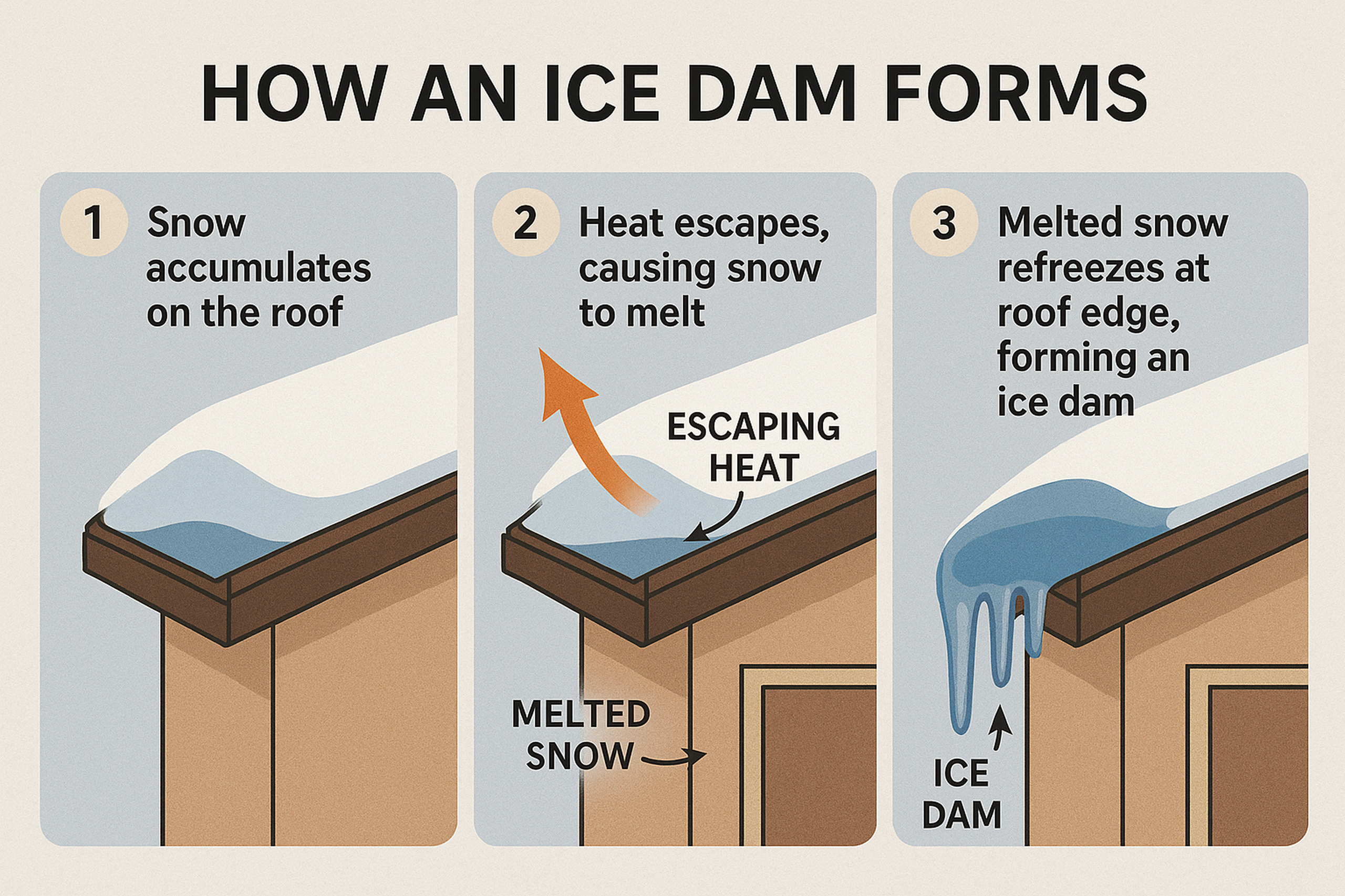
Ice dams occur when the upper part of a roof is warm enough to melt snow while the eaves remain below freezing. Melted water refreezes at the roof edge, forming a barrier. As more snow melts, water pools behind that ice ridge and finds its way under shingles — leading to leaks and damage.
Common causes of ice dams and how to fix them include:
-
Poor attic insulation and ventilation (warm attic = uneven roof surface temperatures).
-
Heat escaping from the living space due to air leaks.
-
Heavy snow followed by freeze-thaw cycles typical of Massachusetts winters.
-
Clogged gutters that trap melting snow and water.
Addressing these causes is key to prevent roof damage during winter and maintain the structural integrity of your home.
Early Warning Signs of Ice Dams
Catch ice dam risk before major damage:
-
Long icicles hanging from roof edges.
-
Water stains on ceilings or upper walls.
-
Ice buildup along gutters or roof valleys.
-
Damp attic insulation or musty smells after a thaw.
Early detection allows you to apply roof ice dam prevention measures before serious snow and ice roof damage occurs.
Best Ways to Protect Your Roof from Winter Damage
The most effective way to avoid ice dams is to maintain a consistent roof temperature by addressing insulation, ventilation, and roof maintenance. Here’s how to do it:
1. Improve Attic Insulation for Winter
A well-insulated attic prevents heat from escaping and warming your roof deck.
- Add insulation to meet recommended R-values (typically R-49 to R-60 in Massachusetts).
- Use baffles to keep soffit vents open and ensure airflow.
- Seal gaps around chimneys, vents, and light fixtures to stop warm air leaks.
Improving insulation is a cornerstone of roof ice dam prevention and a critical step for how to prevent ice dams on your roof in Massachusetts.
2. Improve Attic Ventilation
Proper ventilation keeps your roof surface temperatures consistent.
- Combine soffit vents (intake) with ridge vents (exhaust).
- Ensure insulation does not block airflow channels.
- Consult a professional to confirm your attic ventilation meets current building standards.
Together, attic insulation and ventilation provide long-term snow and ice roof damage prevention.
3. Maintain Gutters and Roof Edges
- Clean gutters and downspouts before the first major snowfall.
- Ensure gutters are pitched correctly and securely attached.
- Repair damaged flashing or shingles that could let water in.
These steps are part of the best ways to protect your roof from winter damage.
4. Consider Ice and Water Shield
When replacing a roof, consider an ice-and-water barrier under shingles. This creates a waterproof layer along eaves, valleys, and chimneys to prevent leaks caused by ice dams.
Short-Term Winter Roofing Tips
Even with long-term fixes, take additional precautions during heavy snowfall:
- Use a roof rake to safely remove snow from the edges (from the ground).
- Avoid climbing on the roof or chipping ice by hand — this can damage shingles.
- Professionally install heat cables if problem areas persist.
- Schedule inspections to spot early signs of ice dams.
If you search for professional ice dam removal near me, a licensed roofer can safely remove ice and implement permanent fixes.
Emergency Response: If You Have an Ice Dam
If water leaks indoors:
- Move valuables and furniture away from the affected area.
- Catch drips with buckets or towels.
- Call a professional for professional ice dam removal near me.
- Avoid DIY ice removal with tools — it can damage shingles.
Massachusetts Winter Roofing Tips Checklist
Before winter storms hit:
- Inspect and clean gutters.
- Add or upgrade attic insulation.
- Seal air leaks into the attic.
- Verify ridge and soffit vents are clear.
- Keep a roof rake handy for heavy snow.
- Schedule a professional inspection if your home has had leaks.
Final Thoughts
Massachusetts homeowners face some of the toughest winter conditions in the country. Protecting your roof from ice dams requires a combination of attic insulation and ventilation, gutter maintenance, snow removal, and professional guidance. Following these winter roofing tips ensures your home stays safe, dry, and efficient all season.
FAQ: Ice Dams and Winter Roofing in Massachusetts
How do I prevent roof damage during winter?
Combine proper insulation, ventilation, and snow removal practices. These winter roofing tips reduce the risk of ice dams and extend your roof’s lifespan.
Will attic insulation alone stop ice dams?
Insulation helps, but you also need proper airflow. Attic insulation and ventilation work together to keep the roof surface evenly cold.
Is it okay to install heat cables?
Yes, but only as a supplemental method of roof ice dam prevention. They won’t fix the root cause if heat is escaping from your attic.
Can ice dams damage my roof even if there’s no visible leak?
Yes. Hidden snow and ice roof damage can rot the decking and lead to mold. Schedule an inspection if you suspect any buildup.
What are the best ways to protect your roof from winter damage?
Improve insulation, ensure proper ventilation, maintain gutters, and schedule professional inspections. Together, these steps prevent leaks, mold, and structural damage.
How quickly can ice-dam damage appear?
Water intrusion can occur within hours during a thaw, and structural or mold damage can develop if water persists. Early prevention is key.