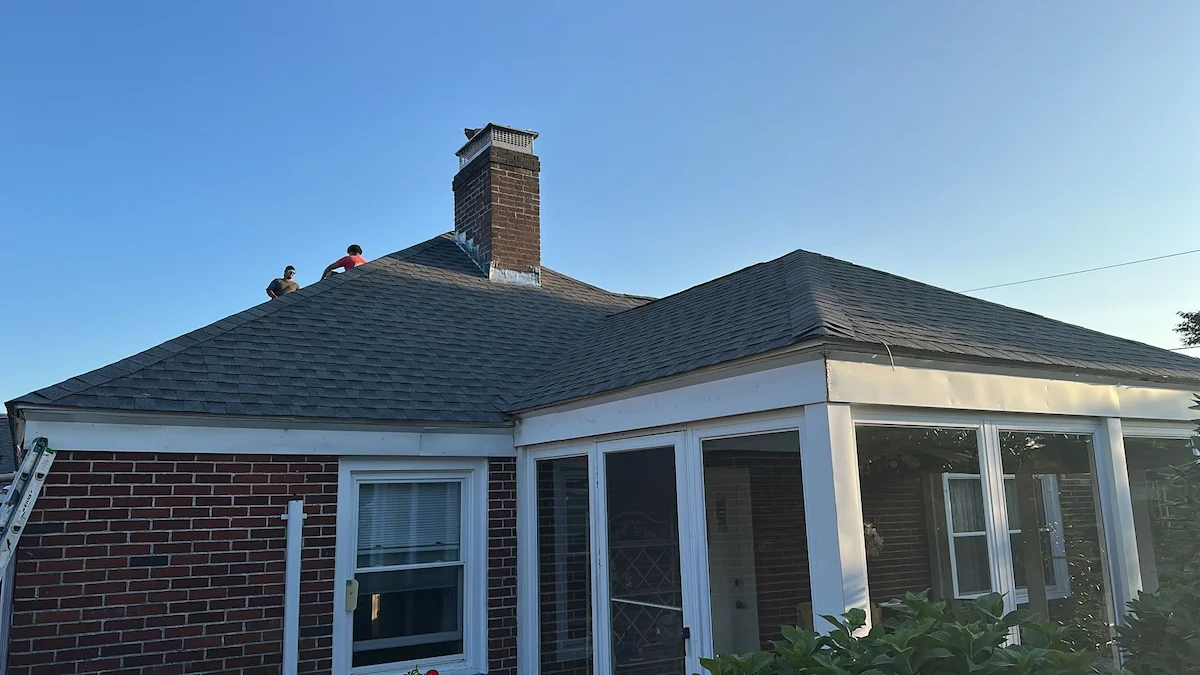
Do you need new gutters with roof replacement? Not necessarily. If your current gutters are in good condition, securely attached, and draining correctly, they may be able to remain in place. However, a roof replacement is the right time to inspect the entire roofline and decide whether the existing gutter system still makes sense for the home.
Your roof, drip edge, fascia, gutters, and downspouts work together to direct water away from the house. Replacing a roof without considering these connected components can leave you with a new roofing system above gutters or roofline materials that may need attention soon afterward.
For Massachusetts homes, where heavy rain, snow, ice, coastal moisture, and falling debris all affect exterior drainage, the decision should be based on the condition and performance of the current system—not simply its age.
What Happens to Gutters During a Roof Replacement?
Gutters are not always removed during a roof replacement, but they should always be evaluated before the work begins.
A roofing contractor needs clear access to the roof edge to install the underlayment, flashing, drip edge, and shingles correctly. Depending on how the existing gutters were installed, sections may need to be loosened, protected, adjusted, or replaced as part of the project.
Before roofing work starts, the contractor should inspect:
- Whether gutters are securely attached
- The condition of the fascia boards behind them
- Whether the gutters interfere with proper roof-edge and drip-edge installation
- Whether water is draining correctly toward the downspouts
- Whether the gutter size is appropriate for the roof’s runoff
- Whether downspouts carry water far enough away from the foundation
This inspection helps avoid completing a new roof while leaving behind a drainage issue or damaged roofline material.
When Keeping Existing Gutters Makes Sense
You may not need new gutters with roof replacement if your current system is still structurally sound and working properly.
Keeping existing gutters can make sense when they are:
- Relatively new or have many years of useful life remaining
- Free from cracks, rust, holes, and recurring leaks
- Securely fastened to solid fascia boards
- Properly pitched toward functioning downspouts
- Large enough to handle water runoff from the roof
- Not sagging, separating, or overflowing during normal rainfall
- Compatible with the new roof’s edge details
In these situations, there is no reason to replace a gutter system just because a new roof is being installed. A good contractor should be able to explain whether the gutters can remain and how they will be protected during the roofing project.
When Replacing Gutters During the Roof Project Makes Sense
Replacing gutters during a roof replacement can be a practical choice when the existing system is likely to need work soon or when other roofline repairs are already planned.
The goal is not to replace gutters unnecessarily. It is to avoid finishing a major roofing project while leaving behind drainage components that could require a separate project shortly afterward.
Your Fascia, Soffit, or Trim Needs Repair
Gutters attach directly to the fascia board along the roof edge. If that wood is soft, stained, rotted, or damaged by moisture, it should be repaired before gutters are reinstalled or replaced.
A roof replacement is often the best time to address these issues because the roofline is already being closely inspected. Installing new gutters over repaired fascia creates a cleaner finished appearance and helps protect the new woodwork from future water damage.
If you have noticed peeling paint, dark staining, soft trim, or visible wood rot near the roof edge, it is worth having the fascia and gutter attachment points checked before the project begins.
Your Current Gutters Are Already Near the End of Their Life
If the gutters are much older than the new roof, replacing them at the same time may save you from scheduling another exterior project in the near future.
Older gutters do not always need replacement, but it may be worth including them in the project if they already have recurring leaks, seam problems, corrosion, loose sections, or visible wear. For a full list of warning signs, see our guide on when to replace your gutters in Massachusetts.
Your Existing System Does Not Handle Roof Runoff Well
A new roof is also a good opportunity to assess whether the current gutter and downspout layout is doing its job.
If water regularly spills over the gutter edges, collects near the foundation, erodes landscaping, or causes staining below the roofline, the issue may involve gutter size, pitch, downspout placement, or drainage capacity.
Replacing the gutters during the roofing project can allow the system to be properly sized and planned for the home’s roofline and water flow.
You Want to Avoid a Second Exterior Project Soon After
Roof replacement and gutter replacement are separate services, but coordinating them can be more convenient when both are needed.
Completing the work together can help you:
- Repair fascia or trim before the gutters are installed
- Coordinate roof-edge drainage details
- Avoid scheduling another project shortly after the new roof
- Reduce the chance of disturbing newly repaired roofline materials later
- Give the exterior a more consistent finished appearance
This can be especially helpful for homeowners who are already planning related work such as siding, trim, soffit, or exterior wood-rot repairs.
Should You Replace Gutters Before or After a New Roof?
In most cases, gutters should be evaluated as part of the roof-replacement plan rather than replaced independently beforehand.
The final order of work depends on the condition of the fascia, the roofing system being installed, and how the gutters connect to the roof edge. If new gutters are needed, they are typically installed after the roofing work and any necessary fascia repairs are complete.
This gives the contractor a chance to create a clean roofline, install proper drip-edge details, and attach the new gutter system to a solid surface.
Questions to Ask Before You Decide
Before deciding whether to keep or replace your gutters, ask your contractor:
- Are my current gutters in good enough condition to remain?
- Is there any fascia, soffit, or trim damage behind the gutters?
- Will the current gutters work properly with the new roof and drip-edge details?
- Are the gutters and downspouts sized correctly for my roof?
- Is water being directed far enough away from the foundation?
- Would replacing the gutters now prevent another exterior project in the near future?
The best answer will depend on your specific home, not on a one-size-fits-all recommendation.
Plan Your Roof Replacement With the Whole Roofline in Mind
A roof replacement is an important investment, and the roofline deserves the same attention as the shingles themselves. Existing gutters can often stay in place when they are secure, properly functioning, and compatible with the new roof installation.
But if the system is aging, the fascia needs repair, or drainage problems are already affecting the exterior, adding new gutters with roof replacement can help protect the new roof, trim, siding, landscaping, and foundation for years to come.
Marine Home Improvement can inspect your roof, gutters, fascia, and roofline to help you make the right decision for your Massachusetts home.
Contact us today to schedule a roof and exterior inspection.
Why Choose Marine Home Improvement?
Since 2001, Marine Home Improvement has been a trusted roofing and exterior remodeling specialist serving homeowners across Massachusetts. Our team delivers high-quality roof replacements, durable siding installations, custom decks, and professional window upgrades—always with clear communication and a commitment to excellent workmanship.
We use premium materials from trusted suppliers and provide detailed, transparent estimates so you always know what to expect. With strong warranties on both labor and products, you can feel confident your home is in expert hands.
Our BBB accreditation and consistent 5-star feedback on Facebook and Yelp highlight our dedication to reliability and customer satisfaction. When you choose Marine Home Improvement, you’re choosing quality, honesty, and long-lasting results.
Planning a Roof Replacement?
Schedule a roof and gutter inspection with Marine Home Improvement to find out whether your existing gutters can stay—or whether replacing them with your new roof is the smarter long-term choice.