
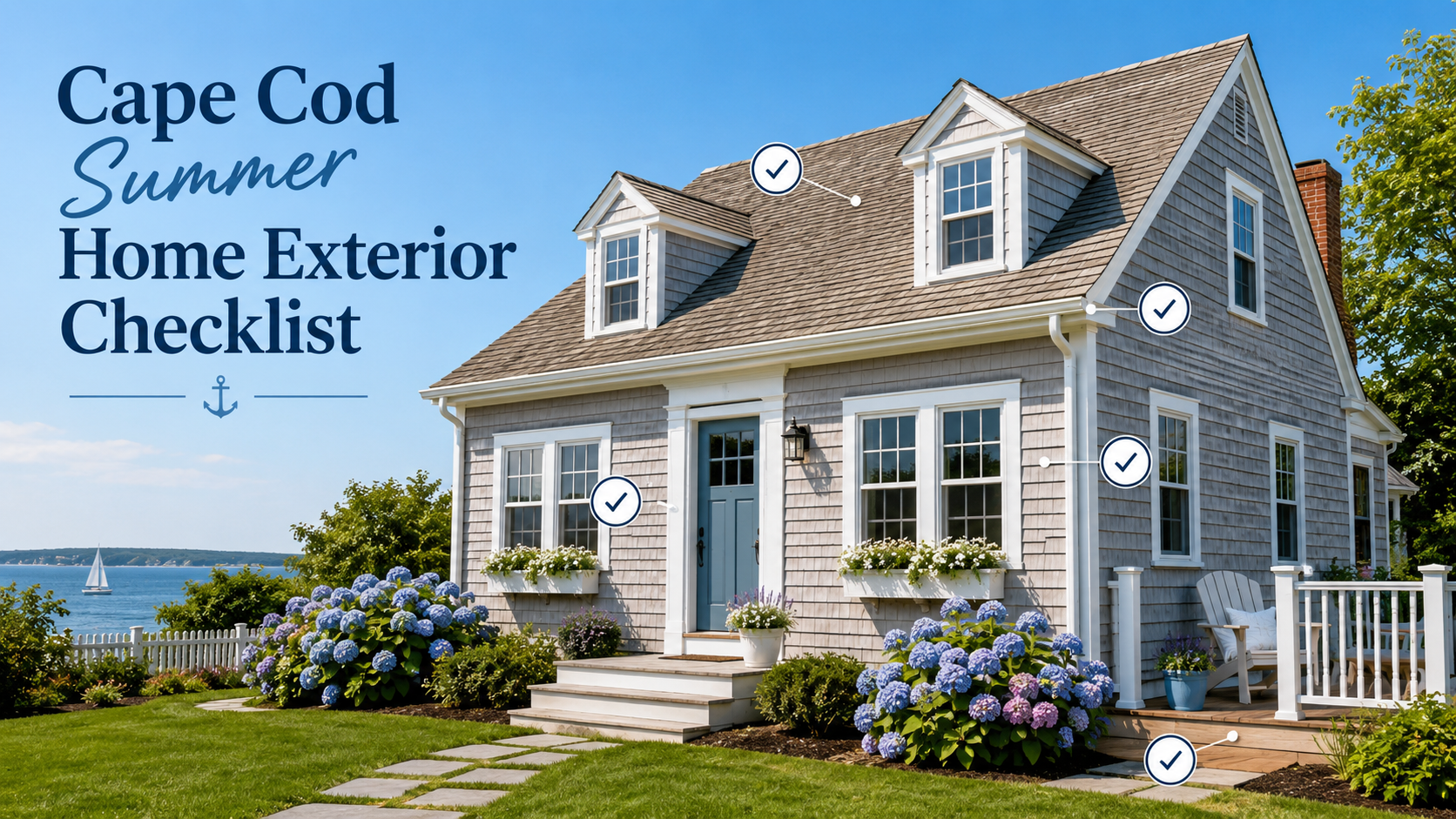
Cape Cod Summer Home Exterior Checklist for Owners Returning for the Season
Cape Cod summer home exterior checklist planning is one of the smartest steps seasonal homeowners can take before opening a property for the busiest months of the year. Whether your home has been closed for the winter, lightly used in spring, or rented out part-time, the exterior should be checked carefully before summer weather, guests, storms, and humidity put more stress on the property.
Cape Cod homes face a unique mix of salt air, coastal moisture, wind, sun exposure, heavy rain, and seasonal use. Small exterior issues can become expensive quickly if they are missed before the season begins. A loose shingle, clogged gutter, soft deck board, leaking skylight, or damaged trim can lead to water damage, rot, safety concerns, and costly repairs during a time when you want to enjoy the home.
Use this checklist to inspect the most important areas of your Cape Cod home before the summer season is fully underway.
Why Cape Cod Seasonal Homes Need a Summer Exterior Check
Seasonal homes often sit through months of harsh weather with limited attention. Even if everything looked fine when the property was closed, winter storms, spring rain, salt air, and temperature changes can create hidden damage.
By early July, many Cape Cod homeowners are returning for family visits, summer rentals, beach weekends, and outdoor entertaining. This makes it the right time to check the exterior before small issues affect comfort, safety, or the long-term condition of the home.
A seasonal exterior check can help you:
- Catch roof leaks before summer storms
- Prevent water damage around siding, trim, windows, and doors
- Make decks, stairs, and railings safer for guests
- Reduce the risk of gutter overflow and foundation moisture
- Protect your home from salt-air and humidity damage
- Plan repairs before peak contractor demand
1. Check the Roof for Missing Shingles, Lifting Edges, and Storm Damage
Your roof should be one of the first areas you inspect when returning to a Cape Cod home for summer. Coastal wind, salt air, and storms can loosen shingles, damage flashing, and expose vulnerable areas around chimneys, vents, skylights, and roof edges.
Look for:
- Missing or lifted shingles
- Dark stains or soft-looking roof areas
- Damaged flashing around chimneys or skylights
- Shingle granules near downspouts
- Sagging or uneven roof sections
- Water stains inside the attic or upper ceilings
Even a small roofing issue can lead to leaks during heavy summer rain. If the roof is older, has visible damage, or has not been inspected recently, scheduling a Cape Cod roof inspection can help prevent a minor repair from turning into a major project.
2. Inspect Gutters and Downspouts Before Heavy Rain
Gutters are easy to overlook, but they play a major role in protecting your home from water damage. If gutters are clogged, loose, or pulling away from the fascia, water can spill over the sides and damage siding, trim, walkways, landscaping, and foundation areas.
Check for:
- Leaves, pine needles, and debris inside gutters
- Loose gutter sections
- Downspouts that drain too close to the house
- Water stains on fascia or siding
- Overflow marks below roof edges
- Sagging or separated seams
Cape Cod homes surrounded by trees or exposed to storms may need gutter cleaning and adjustment more often than inland homes. Before summer thunderstorms become frequent, make sure water is moving away from the house properly.
3. Look for Wood Rot Around Trim, Fascia, and Siding Edges
Coastal moisture and humidity can make exterior wood rot worse during the summer. Trim, fascia boards, window frames, door surrounds, and siding edges are especially vulnerable because they often collect moisture.
Walk around the home and check for:
- Soft or crumbling wood
- Peeling paint
- Swollen trim boards
- Dark staining near siding seams
- Gaps around windows or doors
- Areas where caulking has cracked or pulled away
Wood rot is not just cosmetic. Once moisture gets behind trim or siding, it can spread into sheathing and framing. Repairing small rot areas early can help protect the structure and preserve the appearance of the home.
4. Check Siding for Salt-Air, Moisture, and Storm Wear
Siding protects your home from wind, rain, sun, and salt air. On Cape Cod, siding can take a lot of abuse from coastal conditions, especially on sides of the home facing the water or prevailing winds.
Look for:
- Cracked, loose, or warped siding
- Gaps where siding meets trim
- Peeling paint or worn finish
- Mildew, algae, or dark staining
- Signs of moisture behind siding
- Damaged areas near decks, porches, or rooflines
If siding damage is isolated, repairs may be enough. If the siding is aging, repeatedly failing, or allowing moisture behind the exterior, replacement with more durable coastal materials may be worth considering.
5. Inspect Decks, Porches, Railings, and Stairs Before Guests Arrive
Summer is when decks and porches get the most use. Before family, guests, or renters spend time outside, check that walking surfaces, stairs, and railings are safe.
Pay close attention to:
- Loose deck boards
- Soft or spongy wood
- Rusted fasteners
- Wobbly railings
- Cracked stair treads
- Uneven steps
- Signs of rot around posts or framing
- Areas where water collects
A deck may look fine from above while still having hidden framing damage underneath. If your deck is older, heavily used, or exposed to coastal moisture, a professional inspection is a smart step before peak summer use.
6. Check Windows and Doors for Air Leaks, Water Intrusion, and Damaged Caulking
Windows and doors should seal tightly before summer humidity, storms, and air conditioning use increase. Poor sealing can lead to drafts, higher energy use, water intrusion, and damage around frames.
Check for:
- Cracked or missing caulking
- Soft wood around frames
- Foggy glass between panes
- Doors that stick or do not close properly
- Water stains below windows
- Gaps around exterior trim
- Damaged weatherstripping
If a window or door has repeated water issues, the problem may be more than surface caulking. The surrounding trim, flashing, or siding may need to be inspected.
7. Look Around Skylights, Chimneys, and Roof Penetrations
Skylights, chimneys, vents, and other roof penetrations are common leak points. Even if the roof itself looks fine, flashing or sealant around these areas can wear down over time.
Check interior ceilings near skylights and chimneys for:
- Brown stains
- Bubbling paint
- Musty smells
- Damp drywall
- Dripping after rain
Outside, look for cracked sealant, loose flashing, or debris buildup. Because roof penetrations are harder to inspect safely from the ground, it is often best to have a contractor check these areas during a seasonal roof inspection.
8. Walk the Property After Rain to Check Drainage
After a summer rainstorm, walk around the house and see where water collects. Poor drainage can lead to foundation moisture, siding damage, rot, and walkway issues.
Look for:
- Water pooling near the foundation
- Downspouts draining too close to the home
- Soil washed away near the foundation
- Wet areas below gutters
- Water splashing onto siding or trim
- Low spots near walkways, decks, or porch stairs
Good drainage is especially important for seasonal homes because water problems can go unnoticed between visits.
9. Check Exterior Paint, Caulking, and Sealants
Paint and caulking are protective layers, not just cosmetic details. When they fail, moisture can enter trim, siding, window frames, and door surrounds.
Look for:
- Peeling or bubbling paint
- Cracked caulking
- Gaps between trim and siding
- Exposed wood
- Areas where paint has worn thin
- Mildew or dark staining
Small touch-ups can help protect the home, but repeated peeling or moisture stains may point to a larger ventilation, drainage, or water intrusion issue.
10. Schedule Repairs Before the Summer Season Gets Busier
Many homeowners wait until something leaks, breaks, or becomes unsafe before calling a contractor. For Cape Cod seasonal homes, waiting can make repairs harder to schedule during the busiest months of the year.
A seasonal exterior check helps identify the most urgent issues first, such as:
- Active roof leaks
- Unsafe deck or stair areas
- Rotted trim or fascia
- Loose siding
- Gutter overflow
- Window or door water damage
- Storm-related exterior wear
Taking care of these problems early can help protect the home and make the summer season less stressful.
Keep Your Cape Cod Home Ready for Summer
A Cape Cod summer home exterior checklist gives you a clear way to protect your property before the season gets too busy. By checking the roof, siding, gutters, deck, windows, doors, trim, and drainage, you can catch damage early and avoid larger repair costs later.
Marine Home Improvement helps Massachusetts homeowners with roofing, siding, decks, windows, doors, gutters, and exterior repairs. If you are returning to your Cape Cod home for the season, our team can inspect problem areas and recommend the right repairs before small exterior issues become expensive damage.
Why Choose Marine Home Improvement?
Since 2001, Marine Home Improvement has been a trusted roofing and exterior remodeling specialist serving homeowners across Massachusetts. Our team delivers high-quality roof replacements, durable siding installations, custom decks, and professional window upgrades—always with clear communication and a commitment to excellent workmanship.
We use premium materials from trusted suppliers and provide detailed, transparent estimates so you always know what to expect. With strong warranties on both labor and products, you can feel confident your home is in expert hands.
Our BBB accreditation and consistent 5-star feedback on Facebook and Yelp highlight our dedication to reliability and customer satisfaction. When you choose Marine Home Improvement, you’re choosing quality, honesty, and long-lasting results.
Schedule a Seasonal Exterior Check
Before summer storms, guests, rentals, and humidity put more stress on your Cape Cod home, schedule a seasonal exterior check with Marine Home Improvement.
Protect your roof, siding, deck, gutters, windows, doors, and trim before small problems become costly repairs.
Contact Marine Home Improvement today to schedule your Cape Cod seasonal exterior inspection.
FAQ: Cape Cod Summer Home Exterior Checklist
What should I inspect first when opening a Cape Cod summer home?
Start with the roof, gutters, siding, trim, windows, doors, decks, and drainage. These areas are most exposed to salt air, storms, moisture, and seasonal wear.
How often should a Cape Cod seasonal home be inspected?
A seasonal home should be checked at least once before summer use and again after major storms. Homes near the water or exposed to heavy wind may need more frequent inspections.
Why is salt air hard on Cape Cod homes?
Salt air can speed up wear on roofing materials, siding, fasteners, trim, decks, and metal components. It can also contribute to staining, corrosion, moisture damage, and exterior deterioration.
Should I inspect my deck before renting out a summer home?
Yes. Deck boards, stairs, railings, posts, and framing should be checked before guests or renters use the property. Loose railings, soft boards, and rotted framing can create safety concerns.
When should I call a contractor for seasonal home maintenance?
Call a contractor if you notice roof damage, water stains, soft trim, loose siding, gutter overflow, unsafe deck areas, or leaks around windows, doors, skylights, or chimneys.